S&P 500 Tops 7,500 as Cisco and Nvidia Broaden the Rally; AMAT Jumps After Hours

U.S. stocks finished higher Thursday, turning the morning’s retail-sales test into another record-setting session as technology leadership widened beyond the same narrow AI names. The S&P 500 closed at 7,501.24, clearing the 7,500 line and finishing just above the top of AlphaEdge’s morning base-case range of 7,430–7,500. The Nasdaq Composite added 0.89%, the Dow closed above 50,000, and the Russell 2000 joined the advance instead of lagging it.
The day’s character was different from Wednesday’s narrower tape. Cisco jumped 13.4% after the company paired earnings strength with a push to redirect resources toward AI. Nvidia, Broadcom, cybersecurity, cloud software and crypto-linked equities also moved higher. That gave the session a broader feel even as real estate, materials, health care and pockets of consumer discretionary lagged.
Macro did not disappear. April retail sales rose 0.5%, matching the consensus in the MarketWatch calendar, while initial jobless claims rose to 211,000 for the week ended May 9. Import prices increased 1.9%, a hotter-than-expected reading driven by fuel and nonfuel imports. Yet the equity market treated the data as firm enough to support earnings without forcing a disorderly repricing in rates.
Closing Scoreboard
| Asset | Close | Change | % Change |
|---|---|---|---|
| S&P 500 | 7,501.24 | +45.58 | +0.61% |
| Dow Jones Industrial Average | 50,063.46 | +352.67 | +0.71% |
| Nasdaq Composite | 26,635.22 | +233.96 | +0.89% |
| Russell 2000 | 2,863.09 | +35.33 | +1.25% |
| VIX | 17.26 | −0.09 | −0.52% |
| DXY Dollar Index | 98.89 | +0.67 | +0.68% |
| 10-Year Treasury Yield | 4.489% | −2.1 bps | Yield |
| 2-Year Treasury Yield | 4.023% | −1.7 bps | Yield |
| 2s/10s Spread | +46.6 bps | −0.4 bps | Curve |
| WTI Crude | $101.95 | +$0.93 | +0.92% |
| Brent Crude | $106.52 | +$0.89 | +0.84% |
| Gold | $4,654.20 | −$52.50 | −1.12% |
| EUR/USD | 1.1671 | −0.0047 | −0.40% |
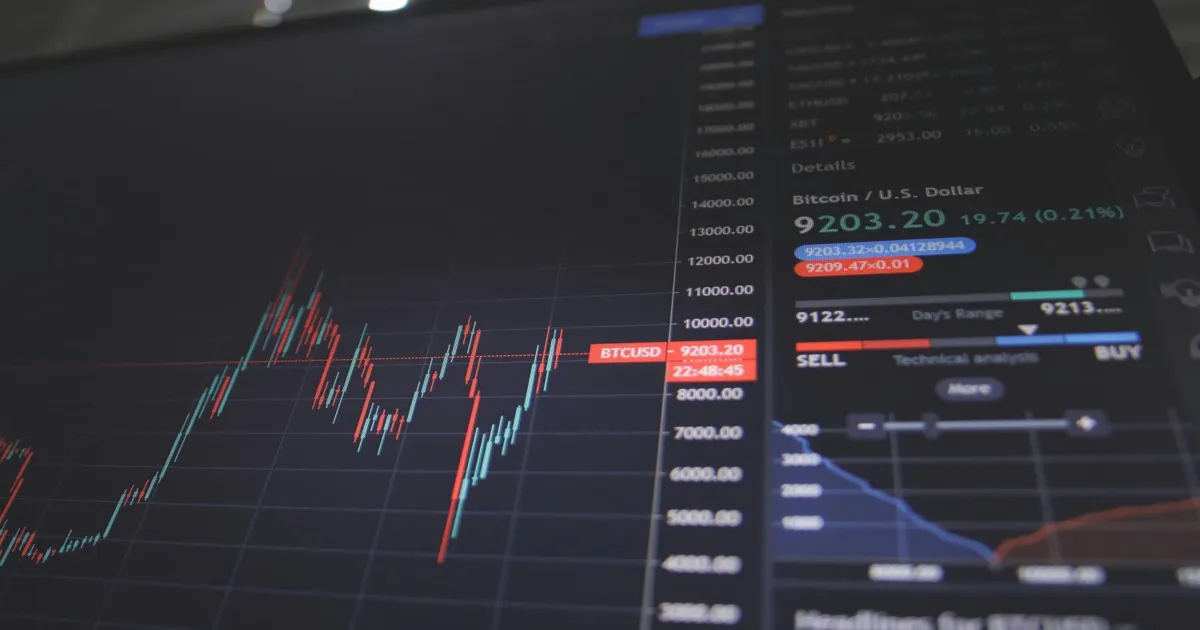
| Bitcoin | $81,259 | +$1,976 | +2.49% |
What Happened
The market opened with a clear question: would Thursday’s economic data confirm enough demand to keep earnings estimates intact, or would it strengthen the inflation story that has been pushing long yields toward uncomfortable territory? The answer was constructive for equities. Retail sales matched expectations rather than breaking sharply in either direction, jobless claims rose but did not signal a labor shock, and buyers treated the import-price spike as another energy-and-trade-pressure warning rather than a reason to abandon risk.
The more important intraday tell was breadth. Wednesday’s rally leaned heavily on Nasdaq leadership while the Dow and Russell struggled. Thursday delivered participation from industrial technology, financials, energy, utilities and small caps. That does not eliminate the market’s dependence on AI, but it does reduce the immediate fragility of a rally that had begun to look too concentrated.
Cisco was the session’s swing factor. The company’s post-earnings move was large enough to matter psychologically because investors have been looking for proof that AI spending is not confined to Nvidia’s GPU ecosystem. Cisco’s message that it would cut jobs while investing more aggressively in AI gave the tape another example of management teams reallocating capital toward the buildout.
Late in the day, the S&P 500 pushed through 7,500 rather than fading at the round number. That matters less as a magic technical level and more as a sign that sellers were not able to use Thursday’s hotter import-price data or stronger dollar as a reason to press risk lower into the close.
Mega-Cap and Key Movers
| Ticker | Close | Move | Catalyst |
|---|---|---|---|
| CSCO | $115.53 | +13.41% | Earnings, AI investment plan and workforce restructuring |
| AVGO | $439.79 | +5.52% | AI infrastructure leadership and semiconductor bid |
| HOOD | $80.70 | +5.15% | Risk-on retail brokerage and crypto beta |
| COIN | $212.01 | +5.06% | Bitcoin rebound and crypto-equity momentum |
| PANW | $238.21 | +4.57% | Cybersecurity growth bid |
| NVDA | $235.74 | +4.39% | AI hardware leadership and China-trip headlines |
| NOW | $991.58 | +3.96% | Enterprise software strength |
| BA | $229.21 | −4.73% | Headline risk and profit-taking despite China order speculation |
| QCOM | $200.08 | −6.14% | China-sensitive semiconductor pressure |
| MU | $776.01 | −3.44% | Memory-chip profit-taking after sharp run |
Top 3 Winners & Top 3 Losers
Winners
Cisco (CSCO) was the day’s standout large-cap winner, rising 13.41% to $115.53. MarketWatch’s Thursday coverage highlighted Cisco’s plan to cut jobs so it can invest more in AI, and the market rewarded that capital-allocation pivot. The reaction suggests investors are willing to pay up for legacy tech companies that can credibly connect cost discipline with AI infrastructure demand.
Broadcom (AVGO) gained 5.52% to $439.79 as AI infrastructure remained the most durable part of the equity tape. The move looked flow-driven rather than tied to one fresh company-specific release, but it fit the broader Thursday pattern: investors were buying suppliers that sit between cloud capex, networking and custom silicon. Broadcom’s strength also helped explain why the technology sector led by such a wide margin.
Nvidia (NVDA) advanced 4.39% to $235.74, adding another leadership leg after Wednesday’s record-driven session. The stock benefited from continued AI-chip demand optimism and headlines around management engagement in China. That is a powerful combination for momentum, though it also keeps the stock sensitive to any shift in export-control, China-sales or capex expectations.
Losers
Qualcomm (QCOM) fell 6.14% to $200.08. No single verified earnings or guidance catalyst explained the full move in the accessible source pull, so the decline is best read as China-sensitive semiconductor pressure plus profit-taking inside a sector that was otherwise mixed beneath the AI winners. That divergence is important: investors bought AI infrastructure, but they did not buy every chip stock indiscriminately.
Boeing (BA) dropped 4.73% to $229.21. Barron’s live-read context tied the stock to speculation around a large China order, but the share-price response was negative rather than celebratory. That makes the move look like a combination of headline-risk discounting and position trimming after recent optimism, not a clean reaction to a confirmed fundamental deterioration.
Micron (MU) slipped 3.44% to $776.01 as memory-chip momentum cooled. The decline looked sector-technical rather than event-driven in the verified sources. With the stock already carrying substantial AI-memory expectations, Thursday’s rotation favored networking, software and platform names more than the highest-beta memory trade.
Sector Breakdown
| Sector ETF | Sector | Move | Read-Through |
|---|---|---|---|
| XLK | Technology | +1.50% | AI, networking and software leadership |
| XLE | Energy | +0.76% | Oil held above $100 WTI |
| XLF | Financials | +0.59% | Risk appetite and firm curve backdrop |
| XLU | Utilities | +0.51% | Defensive yield buyers remained present |
| XLI | Industrials | +0.51% | Mixed, with Boeing weighing on the group |
| XLP | Consumer Staples | +0.31% | Modest defensive participation |
| XLC | Communication Services | +0.30% | Large-cap platform resilience |
| XLY | Consumer Discretionary | −0.04% | Retail-sales data did not lift the whole group |
| XLV | Health Care | −0.05% | Flat defensive performance |
| XLRE | Real Estate | −0.68% | Rate sensitivity lingered |
| XLB | Materials | −0.75% | Dollar strength and commodity crosscurrents |
Global Markets
Global equities sent a mixed but generally supportive signal into the U.S. close. Europe was firm, with the Euro Stoxx 50 up 2.19%, Germany’s DAX up 1.32%, France’s CAC 40 up 0.93% and the FTSE 100 up 0.46%. That strength helped investors look past a stronger dollar and treat the U.S. rally as part of a broader risk bid rather than a purely domestic tech move.
Asia was less uniform. Japan’s Nikkei fell to 62,654.05, down about 0.98% on MarketWatch’s regional table, while Hong Kong’s Hang Seng was essentially flat and Shanghai fell 1.52%. India’s Sensex gained 1.06%. The Asian split matters because Thursday’s U.S. leadership still leaned heavily on AI and China-sensitive supply chains, even as the broader U.S. index tape improved.
Fixed Income and Commodities
Treasuries were stable enough to let equities rally. MarketWatch showed the 10-year Treasury yield at 4.489% and the 2-year at 4.023% near the close, leaving the 2s/10s spread around +46.6 basis points. Earlier in the day, yields pared declines after the retail-sales and jobless-claims data, which is exactly the kind of balanced reaction equity bulls wanted: the data was firm, but not destabilizing.
The inflation signal was less comfortable in import prices. The BLS reported import prices up 1.9% in April, well above the MarketWatch calendar consensus of 0.9%, with fuel imports up 16.3% and nonfuel imports up 0.8%. That is a real margin and policy risk if it persists, particularly with WTI still above $100 and Brent above $106.
Commodities were mixed. WTI crude rose 0.92% to $101.95 and Brent added 0.84% to $106.52, preserving the energy-cost pressure that has complicated the Fed narrative all month. Gold fell 1.12% to $4,654.20 as the dollar strengthened to 98.89 and equities absorbed the macro data without demanding a defensive hedge.
Corporate News
Cisco dominated the corporate tape. The stock’s surge came after coverage noted the company’s intention to cut jobs while investing more in AI, a combination the market read as earnings discipline plus growth optionality. In a market that has been skeptical of margin erosion from AI spending, Cisco’s message landed well.
Nvidia remained central to the market’s mood as investors tracked AI-chip demand and China-related headlines. The key point is not that every China headline is positive; it is that the market continues to capitalize future AI demand aggressively when the news does not directly threaten the capex cycle.
Barron’s and MarketWatch live coverage also kept China trade and corporate diplomacy in focus, including speculation around a potential Boeing order and broader U.S.-China engagement. Boeing’s negative close despite that headline backdrop was a reminder that policy-sensitive industrials can remain volatile even when the macro narrative improves.
Economic Data
| Release | Actual | Consensus | Prior | Market Read |
|---|---|---|---|---|
| April Retail Sales | +0.5% | +0.5% | +1.6% revised | Matched expectations |
| Initial Jobless Claims | 211K | 205K | 199K revised | Softer labor tone, not a shock |
| Import Price Index | +1.9% | +0.9% | +0.9% revised | Hot inflation input |
| Import Prices Ex-Fuel | +0.8% | N/A | +0.2% revised | Nonfuel pressure broadened |
| Business Inventories | Source pull pending | +0.9% | +0.4% | Not used as a core market driver |
The data mix was not cleanly dovish. Retail sales showed consumers still spending, jobless claims pointed to slightly softer labor conditions, and import prices kept the inflation debate alive. That combination helps explain why equities rallied but defensive assets did not collapse: investors saw enough growth to support revenues, but not enough relief to declare the inflation problem solved.
After-Hours Movers
Applied Materials became the main post-close watch. AMAT finished the regular session at $440.56, up 0.90%, and traded around $458.87 after hours, a gain of roughly 4.16% from the close in the post-market quote pull. The initial reaction reinforced Thursday’s semiconductor-infrastructure bid and gave Friday’s open an obvious read-through for chip equipment, AI capex and the broader Nasdaq tape.
| Ticker | Close | After-Hours | Move vs. Close | Read-Through |
|---|---|---|---|---|
| AMAT | $440.56 | $458.87 | +4.16% | Semicap equipment bid |
| CSCO | $115.53 | $115.24 | −0.26% | Small pause after regular-session surge |
| AVGO | $439.79 | $439.85 | +0.01% | Holding gains |
| NVDA | $235.74 | $235.20 | −0.23% | Minor giveback |
The AlphaEdge Take
Thursday was a constructive session because the market did more than chase yesterday’s winners. The S&P 500 cleared 7,500, the Dow closed above 50,000, the Russell participated, and the AI trade broadened through Cisco, Broadcom, Nvidia, software and cybersecurity. That is the kind of action bulls needed after Wednesday’s narrower Nasdaq-led advance.
The caveat is that the rally is still expensive and macro-sensitive. A 1.9% jump in import prices is not a small input-cost detail, and oil above $100 keeps the inflation floor uncomfortably high. If Friday brings another push higher in long yields, the market will need earnings revisions and breadth to carry more of the burden.
For now, the balance of evidence favors staying constructive but selective. AI infrastructure remains the market’s highest-conviction earnings theme, yet Thursday’s losers show that investors are separating winners from lookalikes. The best tape from here would include continued participation from small caps, financials and industrials, not just another surge in the largest AI names.
Friday’s open will likely take its first cue from Applied Materials and the post-close semiconductor reaction. If AMAT’s gain holds and Treasury yields stay contained, the S&P 500 has a path to consolidate above 7,500. If yields reprice higher or China-sensitive chip names keep splitting, Thursday’s breakout may need time to digest before the next leg.
Senior Equity Analyst & Founder at AlphaEdge. Columbia University MSFE (2011–2013). Covering equities, macro, and geopolitics for serious investors.