Rocket Lab Soars 34% as Nasdaq Eyes Record Close; Cloudflare Crashes 24% on Mass Layoffs, Dow Flat

Wall Street closed Friday’s session with one of the most extreme sector divergences of the year. The Nasdaq Composite surged 1.71% to 26,247 — within spitting distance of its all-time high — as technology stocks erupted in a broad-based rally anchored by Rocket Lab’s 34% moonshot. Meanwhile, the Dow Jones Industrial Average barely moved, eking out a 12-point gain amid heavy selling in financials, healthcare, and utilities. The S&P 500 split the difference, rising 0.82% to 7,397.
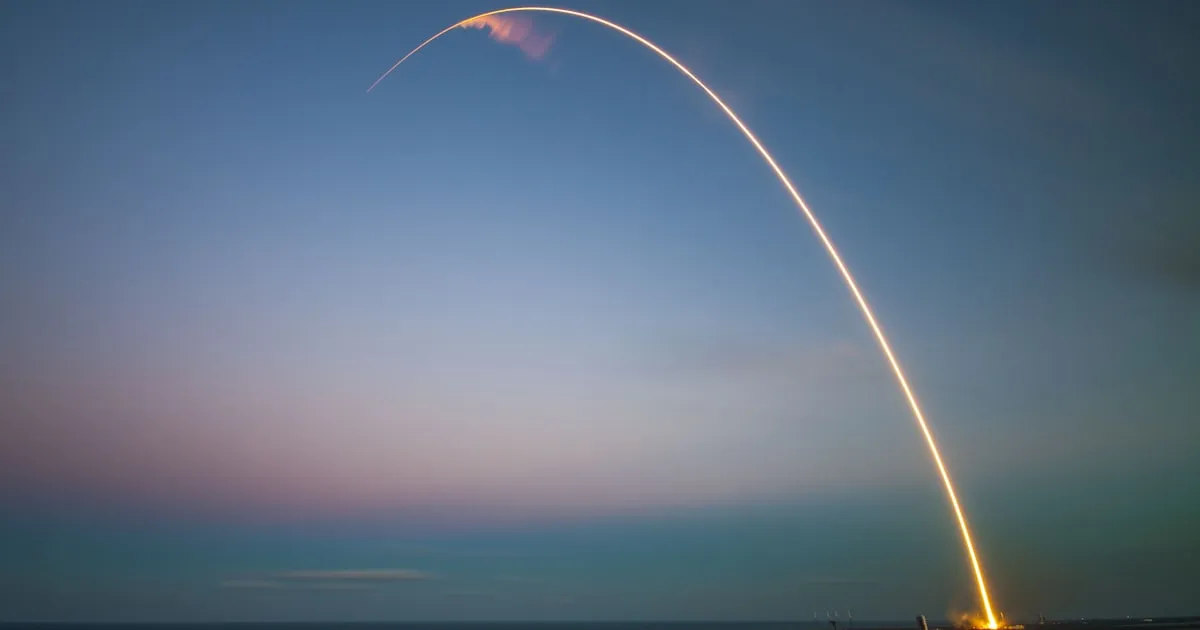
The session’s headline story was Rocket Lab USA (RKLB), which rocketed 34.2% to $105.47 on 76 million shares traded after reporting blowout Q1 earnings, a record $2.2 billion launch contract, and the acquisition of Motiv Space Systems. At the other extreme, Cloudflare (NET) crashed 23.6% after the CDN giant axed roughly 20% of its workforce — some 1,100 employees — with CEO Matthew Prince bluntly stating that AI had rendered their jobs obsolete.
The April employment report added a benign macro backdrop: nonfarm payrolls rose 115,000, keeping the unemployment rate steady at 4.3% and giving the Federal Reserve little reason to alter its patient posture. The 30-year Treasury yield, which briefly touched 5% during Thursday’s session, retreated to 4.944%, and the 10-year settled at 4.365%.
Closing Scoreboard
| Index / Asset | Close | Change | % Change |
|---|---|---|---|
| S&P 500 | 7,397.43 | +60.32 | +0.82% |
| Dow Jones | 49,609.15 | +12.17 | +0.02% |
| Nasdaq Composite | 26,247.08 | +440.88 | +1.71% |
| Russell 2000 | 2,861.21 | +21.58 | +0.76% |
| VIX | 17.13 | +0.05 | +0.29% |
| US Dollar Index (DXY) | 97.74 | −0.33 | −0.34% |
| 10-Year Treasury | 4.365% | −0.026 | — |
| 2-Year Treasury | 3.87% | — | — |
| 2s/10s Spread | +0.49% | — | — |
| WTI Crude | $94.93 | +$0.12 | +0.13% |
| Brent Crude | $100.76 | +$0.70 | +0.70% |
| Gold Futures | $4,732.80 | +$21.90 | +0.47% |
| EUR/USD | 1.1784 | +0.0060 | +0.51% |
| Bitcoin | $80,231.62 | +$352 | +0.44% |
What Happened
Friday was a tale of two markets. Technology names powered the Nasdaq to a 441-point advance while value-oriented sectors — financials, healthcare, utilities, and industrials — sold off aggressively enough to keep the Dow essentially flat. The divergence underscored a market increasingly bifurcated between AI-adjacent growth and everything else.
The “Great Tech Rotation” that has defined May’s trading continued to evolve. After Thursday’s dramatic reversal from semiconductor hardware into AI-monetizing software, Friday saw the move broaden further. Datadog (DDOG) tacked on another 6.1% after its 31% surge the prior session. Fortinet (FTNT) added 5.7%. Akamai (AKAM) exploded 26.6% higher on its own blowout earnings. And the session’s most remarkable mover, Rocket Lab, delivered a 34% rally that put the stock north of $105 after reporting record quarterly revenue, a $2.2 billion launch contract — the largest in the company’s history — and a $2 billion backlog.
But the Cloudflare carnage cast a long shadow. The company’s decision to eliminate roughly one-fifth of its global workforce, with management explicitly citing artificial intelligence as the replacement, sent the stock down 23.6% and raised uncomfortable questions about the pace at which AI is disrupting white-collar jobs. This came on the same day the Labor Department reported a merely adequate 115,000 nonfarm payroll gain for April — a number that looks steady on the surface but masks a deeper transformation in the employment landscape.
Mega-Cap & Key Movers
| Ticker | Close | % Change | Catalyst |
|---|---|---|---|
| RKLB | $105.47 | +34.22% | Record $2.2B contract, Q1 beat, Motiv acquisition |
| INOD | $84.89 | +86.0% | AI data services record quarter, EPS +229% surprise |
| AKAM | $147.71 | +26.58% | Blowout earnings beat |
| FLNC | $24.16 | +27.36% | Multi-day momentum rally continues |
| MRNA | $54.35 | +11.97% | Healthcare outlier strength |
| DDOG | $200.16 | +6.06% | Follow-through from Thursday’s 31% surge |
| FTNT | $114.07 | +5.65% | Continued rally after 20% jump; BTIG upgrade to Buy |
| TSLA | $428.35 | +4.02% | Mega-cap momentum, EV sentiment |
| COIN | $201.16 | +4.25% | Bounce despite second-straight quarterly loss |
| AAPL | $293.32 | +2.05% | Broad tech bid |
| NVDA | $215.20 | +1.75% | Nvidia investing $2.1B in IREN; AI capex theme |
| MSFT | $415.12 | −1.38% | Mega-cap rotation headwind |
| META | $609.63 | −1.16% | Profit-taking after recent strength |
| MCD | $275.75 | −2.80% | Consumer warning despite Q1 beat; $4.56 gas weighing |
| WHR | $44.96 | −6.74% | Continued selloff; guidance halved on consumer strain |
| CRWV | $114.15 | −11.40% | Weak guidance despite earnings beat, rising capex |
| FLR | $43.31 | −15.21% | Post-earnings decline, industrials weakness |
| HUBS | $197.34 | −19.03% | SaaS selloff despite software rally theme |
| NET | $196.13 | −23.62% | Axed 20% of workforce (1,100 jobs); CEO cites AI |
| FWRD | $9.87 | −43.05% | Logistics collapse, heavy losses |
Sector Breakdown
| Sector ETF | Close | % Change |
|---|---|---|
| XLK (Technology) | $175.51 | +3.43% |
| XLB (Materials) | $51.59 | +0.37% |
| XLY (Consumer Disc.) | $120.20 | +0.27% |
| XLP (Consumer Staples) | $84.18 | +0.24% |
| XLRE (Real Estate) | $44.41 | +0.02% |
| XLC (Comm. Services) | $116.94 | −0.37% |
| XLE (Energy) | $55.70 | −0.45% |
| XLI (Industrials) | $173.20 | −0.46% |
| XLF (Financials) | $51.24 | −0.60% |
| XLV (Healthcare) | $143.49 | −0.85% |
| XLU (Utilities) | $44.72 | −0.89% |
The sector picture tells the story of a market driven almost entirely by technology. XLK surged 3.43% — more than four times the S&P 500’s gain — while six of eleven sectors finished in the red. Financials dropped 0.60% as bank stocks (JPMorgan −1.4%, Bank of America −2.7%) gave back gains, and healthcare slid 0.85%, though Moderna’s 12% rally provided a notable pocket of strength. Utilities were the worst performers, down 0.89%, as the rising yield environment continues to weigh on rate-sensitive sectors.
Global Markets
Asia-Pacific
Asian markets were mixed overnight ahead of the U.S. jobs report. Japan’s Nikkei 225 and China’s Shanghai Composite traded cautiously as investors weighed the impact of ongoing U.S.-Iran tensions in the Strait of Hormuz and the trajectory of U.S. monetary policy. The ceasefire framework discussed between Washington and Tehran remained the key geopolitical variable.
Europe
European equities closed modestly higher, with the Stoxx Europe 600 catching a tailwind from energy names after Shell reported Q1 profit of $6.9 billion — up 25% year-over-year and beating the $6.1 billion consensus — though the company cut its buyback program from $3.5 billion to $3 billion. Shell’s warning about a “one-billion-barrel crude shortage” kept the energy narrative front and center.
Fixed Income & Commodities
The bond market calmed after Thursday’s dramatic session that saw the 30-year yield briefly touch the psychologically significant 5% level. The long bond settled at 4.944%, while the 10-year eased 2.6 basis points to 4.365%. The 2-year held steady at 3.87%, keeping the 2s/10s curve at a positive 49 basis points — its steepest sustained level in over a year.
The steepening curve continues to signal that the market expects the Fed to eventually cut short-term rates while long-term borrowing costs remain elevated by structural supply pressures. The $14 trillion investment-grade bond supply pipeline in 2026 — led by hyperscaler capital expenditure programs from Microsoft, Amazon, and Meta — is competing directly with Treasuries for investor capital.
The U.S. dollar weakened for the third consecutive session, with the DXY dropping 0.34% to 97.74 and EUR/USD climbing to 1.1784. Gold futures rose 0.47% to $4,732.80 per ounce, supported by dollar weakness and geopolitical hedging demand.
Oil prices were volatile but ultimately little changed. WTI crude settled at $94.93 per barrel (up $0.12) while Brent finished at $100.76 (+$0.70). The intraday range was wide — WTI swung from $93.82 to $98.64 — reflecting conflicting forces: progress on Iran nuclear talks (bearish for supply disruption premiums) versus Shell’s warning about a looming one-billion-barrel crude shortage and reports of UAE tankers sneaking through the Strait of Hormuz.
Corporate News
Rocket Lab’s Record Quarter
Rocket Lab USA (RKLB) delivered the session’s most decisive earnings reaction, surging 34.2% to $105.47 on massive 76 million share volume. Q1 revenue came in at $200.3 million, up 63.5% year-over-year and beating the $193.5 million consensus. The company announced a record $2.2 billion launch contract — the largest in its history — along with the acquisition of Motiv Space Systems and a total backlog now exceeding $2 billion. After hours, the stock continued climbing, with bids around $108.
Cloudflare’s AI-Driven Layoffs
Cloudflare (NET) plunged 23.6% after announcing it would eliminate approximately 1,100 positions — roughly 20% of its global workforce. CEO Matthew Prince was notably direct in attributing the cuts to artificial intelligence, stating that AI tools had made those roles obsolete. The move puts Cloudflare at the forefront of a trend that Oracle (30,000 cuts), Meta (sweeping layoffs), Block (40% reduction), and now Cloudflare have all embraced in 2026. Year-to-date job cuts across corporate America have reached 300,749, though that number is down 50% from the same period in 2025.
McDonald’s: The McRecession Indicator
McDonald’s (MCD) beat Q1 expectations — revenue rose 9% year-over-year to $6.5 billion, net income gained 5% to $2 billion, and same-store sales grew 3.8% (U.S. +3.9%). But the stock dropped 2.8% after CFO warned that Q2 looks “less rosy,” with sales narrowly declining in April. The culprit: gasoline prices averaging $4.56 per gallon, up sharply from $2.98 on February 28 (the day the U.S. and Israel struck Iran), which is weighing heavily on low-income consumers. Company-owned restaurant margins fell 25% year-over-year. CEO Chris Kempczinski acknowledged that “consumer spending may be getting a little bit worse.”
CoreWeave: Beat but Punished
CoreWeave (CRWV) reported better-than-expected Q1 earnings and revenue but dropped 11.4% as investors focused on weak forward guidance and rising capital expenditure requirements. The AI infrastructure company has yet to convince the market that its heavy spending will translate into sustainable returns.
Fortinet: AI Security Demand
Fortinet (FTNT) extended its rally with another 5.7% gain after Thursday’s 20% post-earnings surge. Q1 revenue rose 20% to $1.8 billion with billings up 31% to $2 billion, driven by surging demand for AI-powered cybersecurity. BTIG upgraded the stock to Buy with a $125 price target, implying 10% additional upside.
Nvidia’s $2.1 Billion IREN Investment
Nvidia announced a $2.1 billion investment in IREN (formerly Iris Energy), the AI data center operator, underscoring the chipmaker’s commitment to securing downstream infrastructure capacity. IREN rallied 7.7% to $61.20 on the news. Separately, Anthropic is reportedly weighing a $50 billion funding round that would value the AI lab at $1 trillion, while Kalshi closed a $1 billion Series F at a $22 billion valuation.
Economic Data
| Release | Actual | Consensus | Prior |
|---|---|---|---|
| Nonfarm Payrolls (April) | +115K | — | +228K (March) |
| Unemployment Rate (April) | 4.3% | — | 4.3% (March) |
| ADP Private Payrolls (April) | +109K | +85K | +61K (March) |
The April employment report painted a picture of a labor market that is cooling gradually rather than cracking. The 115,000 nonfarm payroll gain was a step down from March’s 228,000 but still positive enough to keep the unemployment rate unchanged at 4.3%. ADP’s private-sector measure came in above expectations at 109,000 versus the 85,000 consensus and well above March’s revised 61,000.
Beneath the surface, the labor market is undergoing a structural transformation. The white-collar recession — exemplified by Cloudflare’s 1,100 layoffs, Oracle’s 30,000 cuts, and Block’s 40% workforce reduction — is being offset by continued hiring in healthcare, manufacturing, and infrastructure. The net result is an employment picture that looks stable in aggregate but masks significant sectoral displacement.
After-Hours Movers
| Ticker | Close | AH Bid | AH Move |
|---|---|---|---|
| RKLB | $105.47 | $108.08 | +2.5% |
| INOD | $84.89 | $83.21 | −2.0% |
| NET | $196.13 | $196.04 | Flat |
| CRWV | $114.15 | $114.32 | Flat |
Rocket Lab continued to build on its gains after hours, with bids pushing toward $108 as institutional positioning adjusted to the record contract news. Innodata faded modestly from its 86% regular-session surge, suggesting some profit-taking after an extreme move. Cloudflare and CoreWeave both traded essentially flat after hours, indicating the market had fully digested their respective negative catalysts during the regular session.
The AlphaEdge Take
Friday’s session crystallized a market that is simultaneously euphoric and anxious. The Nasdaq’s 1.71% surge, powered by a broad swath of technology and software names, puts it within striking distance of its all-time high and suggests that the “Great Tech Rotation” from hardware to software has legs. Rocket Lab’s 34% rally on genuine operational milestones — record revenue, a $2.2 billion contract, an expanding backlog — demonstrates that there is still enormous alpha to be captured in companies delivering real results, not just AI narratives.
But the Cloudflare situation is a canary in the coal mine. When a $30 billion company tells the world that AI has made one-fifth of its workforce redundant, that is not a one-off story — that is the leading edge of a structural shift that will reshape employment patterns for years. The juxtaposition of Cloudflare’s layoffs with Innodata’s 86% surge (on AI training data demand) and Rocket Lab’s moonshot encapsulates the creative destruction underway: some companies are being disrupted, some are riding the wave, and the market is rapidly sorting winners from losers.
The consumer picture warrants close attention heading into next week. McDonald’s warning about deteriorating spending at the lower income tier, Whirlpool’s continued freefall after halving guidance, and $4.56 gasoline are all pointing in the same direction. When the world’s largest restaurant chain says the consumer “may be getting a little bit worse,” the signal is hard to dismiss. The labor market remains a buffer — 4.3% unemployment is not recessionary — but the white-collar displacement from AI cuts is a risk that traditional employment metrics are poorly equipped to capture.
For Monday, the setup is constructive for the Nasdaq and growth-oriented names but less so for cyclicals and financials. The 30-year yield’s retreat from 5% provides a reprieve, but the structural forces driving long rates higher — hyperscaler bond issuance, fiscal deficits, geopolitical supply chain rewiring — have not abated. We remain cautiously bullish on the technology leadership but would stay disciplined on position sizing until the S&P 500 makes a definitive move through the 7,400 level.
Senior Equity Analyst & Founder at AlphaEdge. Columbia University MSFE (2011–2013). Covering equities, macro, and geopolitics for serious investors.