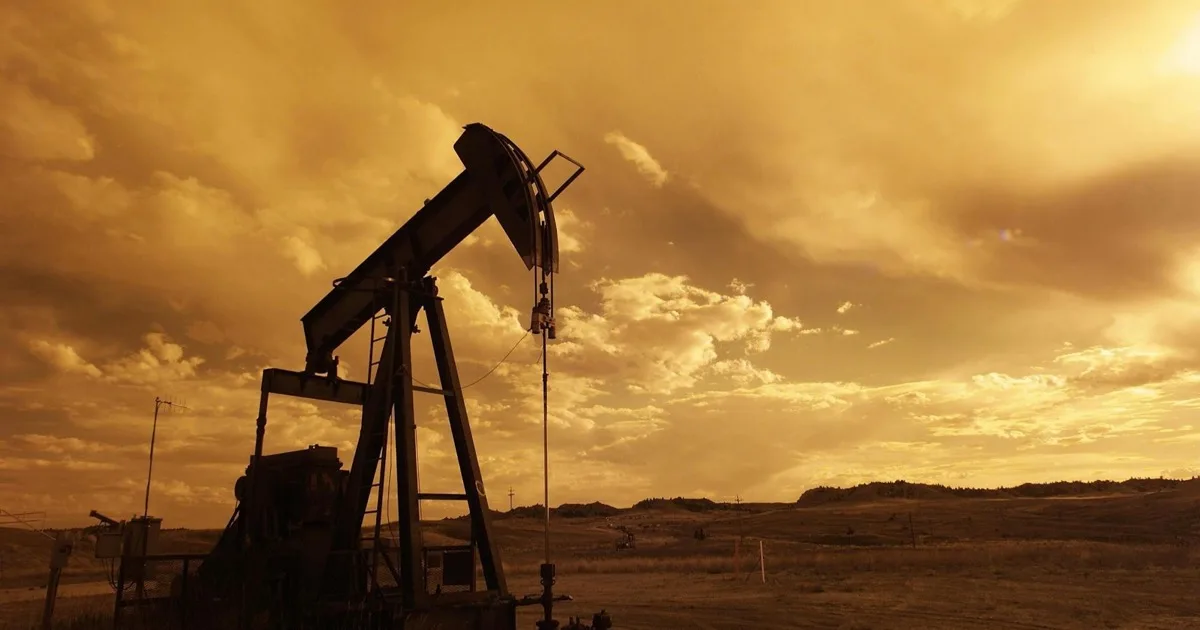
Oil Tops $110 on UAE Nuclear Strike, 10-Year Yield Jumps to 4.63% — S&P 500 Futures Dip as Nvidia Week Opens

The week that contains Nvidia’s earnings, FOMC minutes, and four big-box retailers is opening on a defensive footing. A weekend drone strike that ignited a fire near the United Arab Emirates’ Barakah nuclear power facility—the largest nuclear plant in the Arab world—has pushed Brent crude above $111 and pulled S&P 500 futures down 0.58% to roughly 7,365, off Friday’s 7,408.50 close. Dow futures are leading the decline at −0.78%, while Nasdaq 100 futures are off 0.53%. The selling is uniform across regions: Tokyo’s Nikkei 225 closed down 1.48% at 60,501.62, Australia’s ASX 200 fell 1.45% to 8,505.30, India’s Sensex plunged roughly 900 points, and every major European bourse opened in the red.
The bond market is where the damage is most concentrated. The 10-year Treasury yield has pushed to 4.63%, up another 4 basis points from Friday’s 4.59% close and the highest level since January 2025. That follows last week’s 22-basis-point jump on the back of hot CPI and PPI prints. The yield move is the most important number on the screen this morning: it tightens financial conditions through the equity discount rate at exactly the moment Nvidia’s Wednesday after-the-bell print needs a calm tape to land cleanly. Polymarket has the probability of an “up” open at just 6%—a 44-point collapse in bullish positioning since Friday’s session.
The third element of the morning’s tape is the VIX, which is trading at 18.43, up 6.78% from Friday’s close. That is not a fear print—it is a re-pricing of event risk into a week that contains a single-stock earnings catalyst capable of moving the index 1% in either direction. With oil higher, yields higher, and Nvidia three sessions away, the cost of insurance has been bid before the cash session even opens.
Pre-Market Snapshot
| Indicator | Level | Change |
|---|---|---|
| S&P 500 Futures | 7,365 | −0.58% |
| Dow Jones Futures | — | −0.78% |
| Nasdaq 100 Futures | — | −0.53% |
| VIX | 18.43 | +6.78% |
| 10-Year Yield | 4.63% | +4 bps |
| Gold (Spot) | $4,540 | flat |
| WTI Crude | $103.06 | +2.02% |
| Brent Crude | $111.14 | +1.72% |
| Bitcoin | $78,217 | −0.01% |
Overnight Developments
The Barakah Strike — A New Tier of Iran-Related Tail Risk
Over the weekend, drones struck near the UAE’s Barakah nuclear power facility on the Gulf coast, igniting a fire on the perimeter of the plant. UAE authorities have confirmed there was no radiation leak and no damage to the reactors themselves, but the symbolism is profound: this is the first time the current Iran conflict has produced an incident at a Gulf-state nuclear installation. Saudi air defenses separately intercepted three drones originating in Iraqi airspace overnight, suggesting a coordinated escalation rather than a single isolated incident.
President Trump used Truth Social to issue an ultimatum, warning Iran to act “FAST, or there won’t be anything left of them.” Iranian officials countered that further U.S. threats risk dragging Washington into a deeper military confrontation. The exchange has shifted the perceived probability distribution for the Strait of Hormuz: insurance markets have not yet repriced for a closure, but the tail is materially thicker than it was Friday afternoon. The Barakah strike is the kind of event that does not need to escalate further to keep crude bid—it only needs to remain unresolved.
The 10-Year at 4.63% — A January-2025 Yield in a 22x Market
Friday’s close at 4.59% already represented a sharp acceleration from the prior week. This morning’s push to 4.63% takes the 10-year to its highest level since January 2025 and breaks above the 4.60% level that several macro desks had flagged as a line in the sand for equity multiples. The S&P 500 is currently trading at roughly 22.0x forward earnings; every additional basis point on the long end mechanically compresses that multiple unless earnings revisions step up to absorb it.
The driver is not a single Treasury auction or a Fed speaker. It is the combination of a sticky core CPI surprise, hot PPI, oil pass-through into goods prices, and a fiscal trajectory that has term premia repricing higher each week. The September rate-cut bet, which sat near 60% probability two weeks ago, has been steadily walked back. CME FedWatch has held closer to 30% for any 2026 cut. If Wednesday’s FOMC minutes contain any hawkish language about the inflation persistence the Committee saw in April and May, the 10-year could test 4.70% before Nvidia even reports.
Trip.com Reports Before the Bell
Trip.com Group (TCOM) is scheduled to release Q1 2026 results before the market opens this morning. Consensus is looking for earnings per share of $0.85 on revenue of approximately $2.30 billion. The numbers will read as a cross-check on outbound Chinese travel and on Asia-Pacific consumer health—both of which feed into the global growth narrative that the oil shock is currently complicating. A clean beat would offer a small offset to the macro tape; a miss would compound the bearish setup. With the Trip.com print falling on a session already dominated by geopolitics and yields, the stock’s reaction will likely be more idiosyncratic than market-moving, but management commentary on travel demand from the U.S. and the EU is worth reading carefully.
Global Markets
Asia closed broadly lower across the region. Japan’s Nikkei 225 fell 1.48% to 60,501.62, with exporters and chip-related names leading the decline as the yen firmed on a flight to safety. Australia’s ASX 200 dropped 1.45% to 8,505.30, with banks and materials both down sharply. India’s Sensex was the standout casualty, plunging approximately 900 points as the rupee weakened against the dollar and oil-import sensitivity reasserted itself—India imports roughly 85% of its crude consumption and is the most exposed Asian economy to a sustained move above $110 Brent. Hong Kong’s Hang Seng and the Shanghai Composite both finished lower on the geopolitical risk-off tone, though their declines were milder than the Nikkei’s.
Europe opened with broad-based weakness consistent with the futures tape. Germany’s DAX is off roughly 1.0%, France’s CAC 40 is down 0.95%, Italy’s FTSE MIB has shed 0.8%, and the U.K.’s FTSE 100 is the relative outperformer at −0.2%, cushioned by its heavier energy and mining weightings. Brent’s move above $111 is providing a meaningful offset for Shell, BP, and TotalEnergies, all of which are trading higher in early action. European bank stocks are mixed: the steeper yield curve is supportive, but the sector remains sensitive to any sign that elevated oil prices will compress European industrial margins into the second half.
Macro and Rates
The Treasury curve is bear-steepening this morning, with the 10-year at 4.63% and the 2-year holding near 4.05%, putting the 2s/10s spread at roughly +58 basis points—the steepest in months. A bear-steepener is the textbook shape of a market repricing higher term premia rather than imminent policy moves; the Fed is not expected to do anything at the June meeting, but the long end is now pricing a more persistent inflation regime than the staff forecasts assumed.
The dollar is firmer on safe-haven demand, with the trade-weighted DXY higher and EUR/USD trading on the soft side. Gold is holding near $4,540 per ounce, essentially unchanged on the session as Bitcoin (around $78,200) and the volatility complex absorb most of the geopolitical hedging flow. WTI at $103.06 and Brent at $111.14 confirm that the oil bid is not a one-day spike: futures curves are in modest backwardation in both grades, indicating physical tightness rather than purely speculative positioning. The single most important crude level today is Brent $112—a sustained close above it would force a fresh round of margin-call selling in oil-sensitive emerging-market currencies and likely push the 10-year through 4.70%.
Corporate News
Nvidia (NVDA) reports fiscal Q1 2027 after the close on Wednesday. Consensus sits at roughly $78 billion in revenue and $1.77 in non-GAAP EPS, with the data-center segment expected near $73–75 billion. The most aggressive sell-side desks have modeled prints closer to $79–80 billion. Gross margin consensus is 74.5% against the company’s prior guidance near 75%; anything below 73% would be read as evidence of pricing pressure as Blackwell scales, while a print at or above 75% would confirm pricing power. The options market is pricing an implied move of roughly 8–10% on the print, in line with recent quarters.
Home Depot (HD) reports Tuesday morning, with consensus calling for $3.41 EPS on $41.5 billion in revenue. Comparable-store sales and any guidance commentary on mortgage-rate sensitivity will be scrutinized given the 10-year at 4.63%. Target (TGT) and Lowe’s (LOW) follow on Wednesday morning, and Walmart (WMT) caps the retail block on Thursday with consensus at $0.61 EPS on $177 billion in revenue. With consumer sentiment surveys soft and gasoline prices rising on the back of the crude rally, the big-box quartet will function as a real-time tape on whether higher-income discretionary spending is being absorbed by lower-income staples weakness.
Trip.com (TCOM) reports before the bell this morning ($0.85 EPS / $2.30B revenue consensus). Intel (INTC), which tumbled 7.66% Friday on the cooler-than-expected mid-quarter update, is indicated modestly lower in premarket as the chip group prices in headlines around AI infrastructure capex sustainability. The semiconductor complex more broadly is the index’s biggest contingent risk this week: a soft Nvidia print would land on a tape that has already lost SOXX leadership over the prior two sessions.
Premarket Movers
| Ticker | Company | Premarket | Catalyst |
|---|---|---|---|
| TCOM | Trip.com Group | Earnings AM | Q1 est $0.85 EPS / $2.30B rev |
| XOM | Exxon Mobil | +1.5% | Brent above $111; UAE Barakah strike |
| CVX | Chevron | +1.4% | Crude surge; integrated oil bid |
| OXY | Occidental Petroleum | +2.1% | WTI $103; Permian leverage |
| NVDA | Nvidia | −1.2% | Risk-off; Wed AMC earnings de-risking |
| INTC | Intel | −0.9% | Carryover from Friday’s −7.66% drop |
| HD | Home Depot | −0.6% | Reports Tue AM; rates pressure |
| WMT | Walmart | −0.4% | Reports Thu; defensive bid muted |
Economic Calendar
| Time (ET) | Release | Consensus | Prior |
|---|---|---|---|
| 8:30 AM | NY Fed Business Leaders Survey (May) | n/a | 4.2 |
| 11:00 AM | NY Fed SCE Household Spending Survey | n/a | n/a |
| — | Fed speakers (TBA) | — | — |
Monday’s U.S. macro calendar is unusually light—the heavy releases (Empire State Manufacturing, retail sales, industrial production) all came out Friday or land later in the week. That leaves the tape free to react to the geopolitical and yield-curve story without the dampening effect of a binary data print. The risk is that thin-data sessions during stress periods tend to amplify positioning-driven moves, particularly in the final hour of trading when CTAs and risk-parity funds rebalance.
The AlphaEdge Prediction
Today is a low-conviction setup tape. With the heavy catalysts not arriving until Wednesday, Monday will likely behave as a positioning day: hedges added, defensive rotation into staples and energy, and a steady bleed in the high-multiple growth names that are most exposed to the Nvidia print and the 10-year’s grind higher. The SPY 50-day moving average near $738 is the line in the sand for index technicians; the cash S&P’s equivalent sits in the 7,355–7,365 zone, almost exactly where futures are pricing the open.
Base case (55% probability): The S&P 500 opens near 7,365 and trades in a 7,330–7,395 range as positioning absorbs the geopolitical headlines without producing a true panic flush. Energy leads sectors with crude bid, defensives outperform, and the high-beta semiconductor block fades 1–2% on Nvidia de-risking. The 10-year holds 4.60–4.65%. VIX closes between 18 and 20.
Bull case (20% probability): Crude fades from the $111 print as the UAE incident is contained without further escalation and Trump dials back the rhetoric. The 10-year retraces to 4.58–4.60%, the S&P recovers to test 7,410, and quality growth names lead a relief rally into Tuesday’s Home Depot print. Energy gives back a portion of the premarket gain. VIX collapses back below 17.
Bear case (25% probability): A second Gulf incident during U.S. cash hours pushes Brent through $115, the 10-year breaches 4.70%, and the S&P breaks the 7,330 support to test 7,280. The Nvidia complex sells off 2–3% intraday on multiple compression, dragging the Nasdaq 100 down 1.5%. VIX prints above 22 and the curve bear-steepens further. The week becomes a story about whether Nvidia’s Wednesday print can stabilize a tape that has already broken technically.
Senior Equity Analyst & Founder at AlphaEdge. Columbia University MSFE (2011–2013). Covering equities, macro, and geopolitics for serious investors.