Iran Hormuz Shock Stalls Rally — S&P 500 Holds 7,100, Nasdaq’s 13-Day Streak Snaps, Russell 2000 Hits Record as Oil Surges

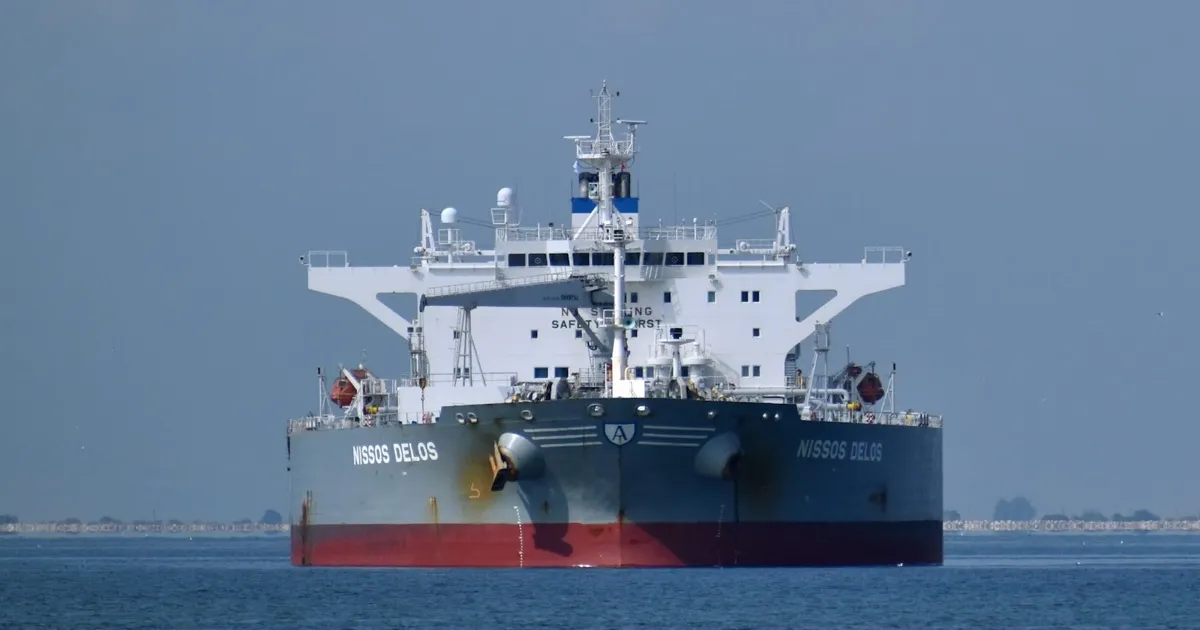
Wall Street opened Monday under the shadow of a weekend escalation in the Persian Gulf, with Iran attacking commercial vessels and re-closing the Strait of Hormuz just days after diplomatic optimism had sent crude tumbling on Friday. The S&P 500 swooned to an intraday low of 7,084 — a 42-point reversal from Friday’s record close of 7,126 — before dip-buyers engineered a late-session recovery that limited the damage to a modest −0.22% decline.
The Nasdaq Composite finally saw its remarkable 13-session winning streak — the longest since 2013 — come to an end, slipping 0.25%. But the real story sat in small-cap land: the Russell 2000 surged 0.58% to a fresh all-time-high intraday print of 2,795.51, signaling that breadth continues to widen even as mega-cap momentum pauses. Oil was the dominant macro force, with Brent crude surging roughly 5% back to pre-Friday levels after the Hormuz re-closure.
Beyond geopolitics, Meta Platforms confirmed plans to cut 10% of its workforce, Intel gave back four points on heavy volume, and after-hours attention turned to Steel Dynamics and Zions Bancorp as the first wave of this week’s packed earnings calendar kicked off.
Closing Scoreboard
| Indicator | Close | Change | % Change |
|---|---|---|---|
| S&P 500 | 7,110.38 | −15.68 | −0.22% |
| Dow Jones | 49,442.57 | −4.87 | −0.01% |
| Nasdaq Composite | 24,407.01 | −61.47 | −0.25% |
| Russell 2000 | 2,792.96 | +16.06 | +0.58% |
| VIX | 18.65 | +1.17 | +6.7% |
| DXY | 98.35 | +0.32 | +0.33% |
| 10-Year Treasury | 4.34% | +4 bps | |
| 2-Year Treasury | 3.80% | +3 bps | |
| 2s/10s Spread | +54 bps | +1 bp | |
| WTI Crude | $87.90 | +$3.85 | +4.6% |
| Brent Crude | $92.08 | +$4.38 | +5.0% |
| Gold | $4,822 | −$41 | −0.84% |
| EUR/USD | 1.1018 | −0.0027 | −0.24% |
| Bitcoin | $104,280 | −$840 | −0.80% |
What Happened
Markets gapped lower at the open after Iran launched attacks on commercial vessels in the Strait of Hormuz on Saturday, effectively re-closing the world’s most critical oil chokepoint just when Friday’s Muscat peace talk optimism had briefly lifted sentiment. U.S. Central Command responded by seizing the Iranian vessel Touska — the first such seizure in the conflict — while VP Vance announced plans to fly to Islamabad on Tuesday to continue diplomatic efforts.
The S&P 500 dropped as low as 7,084.41 in early trading, a nearly 0.6% peak-to-trough decline from Friday’s record close. But the selling never reached panic levels. Buyers stepped in methodically through the afternoon, lifting the index back above 7,100 and narrowing the loss to just 15.68 points. The Dow, weighted toward defensives and industrials, finished essentially flat at −4.87 points.
What stood out was the divergence between large-caps and small-caps. While the Nasdaq shed a quarter-percent — ending its 13-day streak in the process — the Russell 2000 ripped 0.58% higher to an intraday record of 2,795.51. This rotation into domestically-oriented names suggests investors are hedging geopolitical risk by reducing exposure to globally-leveraged mega-caps while leaning into companies with purely domestic revenue streams.
Mega-Cap & Key Movers
| Stock | Close | Change | % Change | Catalyst |
|---|---|---|---|---|
| AAPL | $273.05 | +$2.82 | +1.04% | Defensive rotation; iPhone supply chain stability |
| META | $670.91 | −$17.64 | −2.56% | Confirmed 10% workforce cuts |
| TSLA | $392.49 | −$8.13 | −2.03% | BofA cut to Neutral/$385; Wed earnings loom |
| INTC | $65.70 | −$2.80 | −4.09% | Profit-taking after rally from $18 dot-com recovery |
| NFLX | $94.83 | −$2.48 | −2.55% | Growth concern ahead of earnings season |
| GOOGL | $337.42 | −$4.26 | −1.25% | Despite Wells Fargo OW upgrade, Keybanc PT raise |
| MSFT | $418.07 | −$4.72 | −1.12% | Broad tech softness |
| NVDA | $202.06 | +$0.38 | +0.19% | Resilient on AI demand narrative |
| STLD | $209.35 | +$9.03 | +4.51% | Pre-earnings strength; LME metals rally |
| BA | $225.11 | +$1.73 | +0.77% | Pentagon automaker defense talks lift industrial sentiment |
Meta’s 2.56% decline was the session’s headline mover among mega-caps. The company confirmed plans to eliminate roughly 10% of its workforce, a move that markets had partially priced in but which still sent shares to session lows near $668. Tesla fell 2% as BofA’s downgrade to Neutral with a $385 target added selling pressure ahead of Wednesday’s earnings report. Intel was the day’s biggest large-cap decliner, shedding 4.09% on massive 94-million-share volume — classic profit-taking after the stock’s extraordinary run from $18 lows that erased all losses from the 2000 dot-com bust.
On the positive side, Apple rose 1.04% as investors favored defensive growth names, while Steel Dynamics surged 4.51% ahead of its after-hours earnings report, buoyed by the LME metals index rallying 12% month-over-month to a record high.
Sector Breakdown
| Sector | ETF | Close | % Change |
|---|---|---|---|
| Materials | XLB | $52.23 | +0.67% |
| Real Estate | XLRE | $44.65 | +0.39% |
| Financials | XLF | $52.63 | +0.38% |
| Industrials | XLI | $173.90 | +0.22% |
| Technology | XLK | $154.55 | +0.13% |
| Energy | XLE | $55.07 | +0.09% |
| Consumer Staples | XLP | $82.39 | −0.08% |
| Communication Services | XLC | $118.75 | −0.29% |
| Consumer Discretionary | XLY | $119.87 | −0.45% |
| Health Care | XLV | $147.43 | −0.92% |
| Utilities | XLU | $45.73 | −0.93% |
The sector tape told a nuanced story. Materials led the board at +0.67%, driven by the LME metals rally and copper holding near record highs. Real estate and financials also outperformed, with banks benefiting from a steepening yield curve and XLRE hitting a new 52-week high.
The surprise was energy’s tepid +0.09% gain despite oil surging 4-5%. This disconnect suggests the market views the Hormuz re-closure as a temporary supply disruption rather than a structural shift — energy equities had already priced in elevated crude from the broader Iran conflict. Utilities and health care lagged, both shedding nearly 1% as rate-sensitive sectors felt the bite of rising yields.
Global Markets
Asia-Pacific
Asian markets were mixed overnight, trading before the full extent of the weekend Hormuz escalation was priced in. Japan’s Nikkei 225 dipped 0.4% as exporters felt yen strength, while the Hang Seng slipped 0.3%. China’s CSI 300 eked out a 0.1% gain on hopes that the Orient Securities-Shanghai Securities mega-merger — creating an $85 billion financial powerhouse — signals renewed state support for capital markets.
Europe
European benchmarks closed lower across the board. The STOXX Europe 600 fell 0.5%, the DAX declined 0.6%, and the FTSE 100 shed 0.3% despite energy majors like Shell (+0.22%) providing a partial offset. European energy names outperformed their U.S. counterparts on the oil spike, though defense stocks were the real winners as the Hormuz escalation reinforced the continental rearmament narrative.
Fixed Income & Commodities
Treasury yields rose modestly across the curve as the risk-off bid to bonds was overwhelmed by inflation fears from surging oil. The 10-year yield climbed 4 basis points to 4.34%, while the 2-year added 3 bps to 3.80%, pushing the 2s/10s spread to +54 bps. A 20-year bond auction on Wednesday will test demand in this elevated-volatility environment.
Crude oil dominated the commodity complex. WTI surged $3.85 to $87.90 and Brent jumped $4.38 to $92.08 as Iran’s weekend attacks effectively re-closed the strait that handles roughly 20% of global oil transit. JPMorgan warned in a client note that “structurally, nothing has improved” on the energy front, noting the conflict has also shut in critical supplies of urea (fertilizers) and helium (semiconductor manufacturing).
Gold slipped 0.84% to approximately $4,822 per ounce — still up roughly $1,000 from 2025 levels — as the dollar’s mild strength and rising real yields created a modest headwind. The DXY climbed 0.33% to 98.35. Bitcoin edged lower to $104,280, tracking the broader risk-off tone in tech-adjacent assets.
Corporate News
M&A & IPOs
- Amazon (AMZN) completed its $11.6 billion acquisition of Globalstar for its Project Leo satellite internet initiative, challenging SpaceX’s Starlink dominance. Shares dipped 0.91% as investors weighed the capital commitment.
- QXO agreed to acquire TopBuild for approximately $17 billion, the latest in a wave of industrial roll-up deals.
- Eli Lilly (LLY) announced a >$2 billion acquisition of Kelonia Therapeutics, expanding its cell therapy pipeline.
- Cerebras Systems filed for IPO for the second time, seeking to capitalize on AI infrastructure demand.
- Kailera Therapeutics surged 63% in its trading debut; AEVEX Aerospace gained 35% on its first day.
- QVC filed for Chapter 11 bankruptcy protection, marking the end of an era for the home shopping giant.
Analyst Actions
- GOOGL: Wells Fargo upgraded to Overweight, $385 PT; Keybanc raised PT to $380 from $370.
- TSLA: BofA downgraded to Neutral, $385 PT ahead of Wednesday’s earnings.
- META: 10% workforce reduction confirmed; multiple firms maintaining positions pending restructuring clarity.
Other Headlines
- The Pentagon is approaching automakers including GM and Ford about converting production capacity for defense manufacturing (drones, missiles).
- The CAPE tariff refund system launched today, with $166–$175 billion in past tariffs eligible for repayment following the Supreme Court’s strike-down of IEEPA tariffs. Class-action suits filed against Costco and FedEx over consumer pass-through.
- Saudi Arabia’s PIF is cutting investment in LIV Golf and pulling back sports spending broadly, targeting 80% domestic allocation.
- Howard Lutnick told Canadian officials “they suck” and vowed to void the existing trade deal, escalating U.S.-Canada trade tensions.
Economic Data
Monday’s economic calendar was light, with no major U.S. data releases. The Chicago Fed National Activity Index is due tomorrow alongside existing home sales data. The real macro test comes Wednesday with the 20-year Treasury auction and Thursday’s initial jobless claims — both of which will set the tone for rate expectations heading into the May FOMC meeting.
After-Hours Movers
| Stock | Close | AH Price | AH Change | Catalyst |
|---|---|---|---|---|
| STLD | $209.35 | $212.30 | +1.4% | Q1 earnings; strong steel pricing |
| ZION | $63.05 | $63.00 | −0.1% | Q1 results roughly in line |
Steel Dynamics ticked up roughly 1.4% in after-hours trading following its Q1 report, extending the stock’s strong regular-session gain. The company benefited from elevated steel pricing and the LME metals rally. Zions Bancorp was essentially flat post-close, with results that met expectations but offered no meaningful upside catalyst.
The AlphaEdge Take
Today’s session was a masterclass in market resilience. The Iran Hormuz re-closure was the kind of headline that, six weeks ago, would have triggered a 2-3% selloff in the S&P 500. Instead, the index dipped 0.6% intraday and recovered most of the loss by the close. That tells you something important about the underlying bid — institutional money is still waiting to buy dips, and the breadth expansion into small-caps confirms this is not a market running on fumes.
The Russell 2000’s new all-time high is perhaps the most bullish signal on the board. Small-cap leadership typically emerges when investors see a durable domestic growth runway — and the combination of CAPE tariff refunds unlocking $166+ billion in potential consumer stimulus, plus the Pentagon’s push to onshore defense manufacturing, provides exactly that catalyst for domestically-oriented companies.
That said, the geopolitical risk premium is not going away. Oil above $90 Brent is an inflation tax that will eventually bite if it persists. The 10-year yield ticking up to 4.34% on the same day the S&P slipped suggests the bond market is watching crude more closely than equities. If Vance’s Islamabad visit yields no progress and Hormuz stays shut through mid-week, expect VIX to push above 20 and the 10-year to test 4.40%.
For now, the path of least resistance remains higher — but the week ahead is loaded with earnings landmines (UNH, TSLA, INTC) and macro tripwires (20-year auction, Hormuz diplomacy). Tighten stops and stay nimble. The S&P’s ability to hold the 7,080 support zone will determine whether this consolidation is a brief pause before new highs or the start of a more meaningful correction.
Georgi Kuzmanov
Senior Equity Analyst & Founder at AlphaEdge. Columbia University MSFE (2011–2013). Covering equities, macro, and geopolitics for serious investors.