Hot CPI at 3.8% and Oil Above $100 Fuel Stagflation Fears — S&P 500 Stages Late Recovery

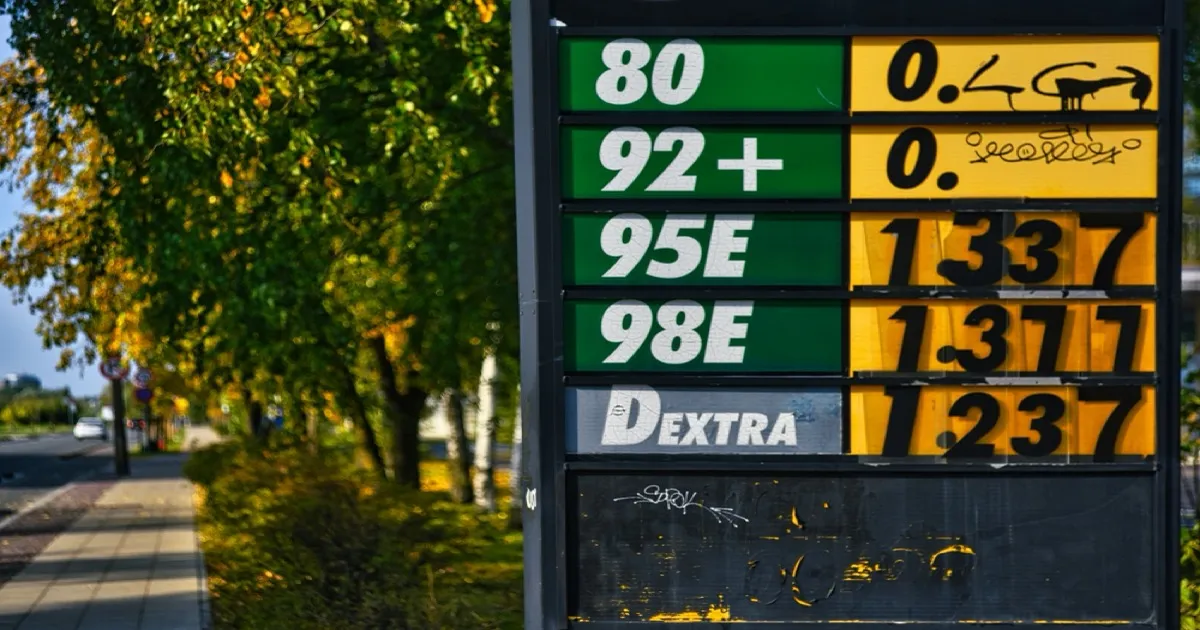
It was CPI Day, and the numbers left little room for dovish optimism. April’s headline Consumer Price Index surged 3.8% year-over-year — above the 3.7% consensus — while core CPI printed at 2.7%, beating the 2.6% estimate by a meaningful margin. With West Texas Intermediate crude oil smashing through $100 per barrel for the first time during the Hormuz crisis, the stagflation narrative that had been simmering for weeks boiled over into the hard data.
The S&P 500 initially buckled under the weight of the print, plunging as much as 0.85% to an intraday low of 7,338.54 in the first hour of trading. But the selling never spiraled into panic. Dip buyers emerged methodically through the afternoon, and the index clawed back to close at 7,401.63, down a modest 0.15% — landing precisely in our morning update’s base-case range of 7,380–7,420. The Dow Jones Industrial Average eked out a small gain of 0.11%, while the Nasdaq Composite bore the brunt of the repricing at −0.71%.
Beneath the surface, Tuesday’s session was a textbook risk-off rotation. Defensive sectors led decisively — Healthcare surged 1.96%, Consumer Staples gained 1.28% — while Technology was crushed at −1.51%. The message from the bond market was unambiguous: the 10-year Treasury yield jumped 5.3 basis points to 4.463%, the 30-year breached 5%, and rate-cut expectations retreated further. Morgan Stanley called the Strait of Hormuz closure “the largest oil supply disruption in the history of the oil market,” and today’s data confirmed the inflationary consequences are no longer theoretical.
Closing Scoreboard
| Indicator | Level | Change | % Change |
|---|---|---|---|
| S&P 500 | 7,401.63 | −11.21 | −0.15% |
| Dow Jones | 49,760.55 | +56.07 | +0.11% |
| Nasdaq Composite | 26,088.20 | −185.92 | −0.71% |
| Russell 2000 | 2,842.83 | −27.81 | −0.97% |
| VIX | 17.99 | −0.39 | −2.12% |
| DXY (Dollar Index) | 98.30 | +0.35 | +0.36% |
| 10-Year Treasury | 4.463% | +5.3 bps | — |
| 2-Year Treasury | 4.00% | +5 bps | — |
| 2s/10s Spread | 47 bps | flat | — |
| WTI Crude | $102.27 | +$4.20 | +4.28% |
| Brent Crude | $107.68 | +$3.45 | +3.33% |
| Gold Spot | $4,721.40 | −$7.10 | −0.15% |
| EUR/USD | 1.1743 | −0.0045 | −0.38% |
| Bitcoin | $80,675 | −$1,137 | −1.39% |
What Happened
The CPI report dropped at 8:30 a.m. ET, and the reaction was swift. S&P 500 futures, already under pressure from the overnight session, extended losses as the hotter-than-expected core reading — +0.38% month-over-month versus the 0.3% consensus — signaled that underlying inflation pressures remain sticky even before the full impact of $100-plus oil filters through to consumer prices. The headline month-over-month figure of +0.64% was also above expectations, driven by energy costs and persistent services inflation.
The first ninety minutes were ugly. The S&P 500 gapped lower at the open and slid to 7,338.54, a decline of roughly 0.85% from Monday’s close. The Russell 2000 fared worse, dropping nearly 2% before recovering to close down 0.97%. The VIX spiked to 19.10 intraday, reflecting the initial shock. But the selling lacked follow-through — no major sector capitulated, institutional flows remained orderly, and the options market quickly repriced risk rather than panic-hedging.
By early afternoon, the recovery was underway. Financials led the charge higher, benefiting from the steeper yield curve. Healthcare caught a bid as investors rotated into recession-resistant names. Energy stocks, the logical beneficiaries of $100 oil, added gains but underperformed defensives, suggesting the market’s primary concern was inflation’s effect on demand rather than supply-driven commodity appreciation.
The VIX’s behavior told the real story. Despite an intraday spike to 19.10, the fear gauge settled at 17.99, down 2.12% on the day. The CNN Fear & Greed Index held in “Greed” territory at 66.6, though its components diverged sharply: market momentum scored 99.2 (extreme greed) and put-call ratios registered 87 (extreme greed), while junk bond demand sank to 28.8 (fear). That divergence — equities complacent while credit markets tighten — is worth monitoring closely. The market absorbed a genuinely adverse inflation print and a record oil supply disruption without meaningful structural stress. Whether that reflects resilience or complacency, Wednesday’s PPI data may determine.
Mega-Cap and Key Movers
| Stock | Close | % Change | Catalyst |
|---|---|---|---|
| SE (Sea Limited) | $96.02 | +13.14% | Massive Q1 earnings beat |
| EBAY | $110.40 | +2.10% | Rejected GameStop’s $56B bid |
| JPM | $304.88 | +1.63% | Financials rally on steeper curve |
| DIS | $106.16 | +1.38% | Defensive rotation |
| AAPL | $294.80 | +0.72% | Near ATH at $295.27 |
| META | $603.00 | +0.69% | — |
| NVDA | $220.78 | +0.61% | — |
| GOOGL | $387.35 | −0.33% | — |
| MSFT | $407.77 | −1.18% | Growth repricing |
| AMZN | $265.82 | −1.18% | Growth repricing |
| TSLA | $433.45 | −2.61% | High-beta tech selloff |
| GME | $22.37 | −3.45% | eBay rejected $56B takeover bid |
| GLW (Corning) | $198.24 | −4.41% | Broad tech weakness |
| INTC | $120.61 | −6.82% | Heavy volume (170M shares) |
| HIMS | $25.03 | −14.10% | Missed on both revenue and EPS |
Sector Breakdown
The sector tape was as clean a risk-off rotation as you will see. Defensive sectors dominated the green columns while growth and cyclicals lagged. All 11 S&P 500 sectors, via their SPDR ETFs:
| Sector (ETF) | % Change |
|---|---|
| Healthcare (XLV) | +1.96% |
| Consumer Staples (XLP) | +1.28% |
| Financials (XLF) | +0.78% |
| Energy (XLE) | +0.70% |
| Communication Services (XLC) | +0.24% |
| Utilities (XLU) | +0.11% |
| Real Estate (XLRE) | +0.02% |
| Materials (XLB) | −0.23% |
| Industrials (XLI) | −0.39% |
| Consumer Discretionary (XLY) | −0.90% |
| Technology (XLK) | −1.51% |
The 3.47-percentage-point spread between top-performing Healthcare (+1.96%) and bottom-dwelling Technology (−1.51%) was one of the widest single-session sector divergences this year. Financials benefited from the bear-steepening yield curve, while Energy’s relatively modest +0.70% gain despite oil’s 4.28% surge suggests the market is pricing in demand destruction risk alongside supply disruption.
Global Markets
European markets had already adopted a cautious posture ahead of the U.S. CPI release. Energy-heavy European indices outperformed their U.S. counterparts, buoyed by oil majors that have been direct beneficiaries of the Hormuz premium. According to Axios Markets, European oil majors collectively booked $4.75 billion in gains from Iran-related volatility during the disruption. Asian markets were mixed overnight, with commodity-importing economies like Japan and South Korea under pressure while commodity exporters posted modest gains. The global tone was one of recalibration rather than capitulation, with markets broadly repricing the inflation outlook higher.
Fixed Income and Commodities
The Treasury market delivered the most decisive verdict on Tuesday’s CPI print. The 10-year yield surged 5.3 basis points to 4.463%, the 5-year jumped 5.6 basis points to 4.124%, and the 30-year yield pushed to 5.031% — breaching the psychologically important 5% threshold for the first time in this cycle. The front end of the curve moved in sympathy, with the 2-year yield climbing to approximately 4.00%. The 2s/10s spread held near 47 basis points, suggesting the bear-steepening pattern from earlier this spring has stabilized.
West Texas Intermediate crude oil was Tuesday’s most dramatic mover, surging 4.28% to $102.27 per barrel — its first close above $100 since the Strait of Hormuz crisis began ten weeks ago. Brent crude followed suit, gaining 3.33% to $107.68. Morgan Stanley’s analysis quantified the disruption: the Hormuz closure has removed 12.3 million barrels per day from global supply, with the U.S. and China absorbing roughly two-thirds of the shortfall through strategic reserves and alternative sourcing. The bank described it as “the largest oil supply disruption in the history of the oil market” but noted that oil remains “positively cheap” on an inflation-adjusted basis compared to the 2011–2014 period.
Gold was nearly flat at $4,721.40, down 0.15% — a muted response to hot inflation data that suggests the stronger dollar (DXY +0.36% to 98.30) and rising real yields are offsetting inflation-hedge demand. The euro slipped 0.38% to $1.1743 against the greenback. Bitcoin fell 1.39% to $80,675, continuing its pattern of trading as a risk asset rather than an inflation hedge during periods of macro stress.
Corporate News
Sea Limited Surges on Q1 Beat
Sea Limited (SE) was Tuesday’s standout, surging 13.14% to $96.02 after delivering a blowout Q1 earnings report. The Singapore-based e-commerce and gaming company exceeded both revenue and earnings expectations, reigniting optimism about growth opportunities in Southeast Asian digital markets and making it the best-performing large-cap of the session.
Hims & Hers Collapses on Earnings Miss
Hims & Hers Health (HIMS) fell 14.10% to $25.03 after missing on both top and bottom lines, making it the session’s worst large-cap performer. The telehealth company’s revenue shortfall and margin compression raised questions about the sustainability of its growth trajectory.
Intel Under Heavy Selling Pressure
Intel (INTC) plunged 6.82% to $120.61 on exceptionally heavy volume of 170 million shares — roughly three times its average — as the broader semiconductor sector rotation accelerated in the higher-rate environment.
eBay Rejects GameStop Bid
eBay (EBAY) rose 2.10% to $110.40, approaching its 52-week high of $111.38, after rejecting GameStop’s reported $56 billion takeover bid. GameStop (GME) fell 3.45% on the news.
Cerebras IPO Sizes Up
Cerebras Systems upsized its IPO pricing to $150–$160 per share, implying a $34 billion valuation with $4.8 billion raised. The offering is reportedly 20x oversubscribed, suggesting robust institutional appetite for AI-adjacent names even amid today’s rate repricing.
Other Developments
Byron Allen acquired BuzzFeed for $120 million. Trian Fund Management is reportedly exploring a take-private of Wendy’s. KKR is injecting $150 million into FS KKR Capital Corp after JPMorgan cut the firm’s credit facility by $650 million — a signal of tightening conditions in the private lending space. Hudson River Trading posted a record $6.4 billion first quarter, underscoring the exceptional volatility regime benefiting systematic traders.
On the geopolitical front, the Trump-Xi summit delegation was announced, featuring Apple CEO Tim Cook, BlackRock’s Larry Fink, Blackstone’s Stephen Schwarzman, and Elon Musk. The notable absence of NVIDIA CEO Jensen Huang fueled speculation about the semiconductor trade dynamics. Separately, the U.S.-Iran ceasefire remains, in the words of one diplomatic source, “on massive life support,” offering little near-term hope for Hormuz reopening.
Economic Data
| Time (ET) | Release | Actual | Consensus |
|---|---|---|---|
| 8:30 AM | CPI M/M (Apr) | +0.64% | +0.6% |
| 8:30 AM | CPI Y/Y (Apr) | +3.8% | +3.7% |
| 8:30 AM | Core CPI M/M (Apr) | +0.38% | +0.3% |
| 8:30 AM | Core CPI Y/Y (Apr) | +2.7% | +2.6% |
| 10:00 AM | Existing Home Sales M/M (Apr) | +0.2% | +3.0% |
The CPI print was the dominant release, but the existing home sales data provided an additional warning signal. Sales rose just 0.2% month-over-month versus the 3.0% expected gain, even as the median home price hit a record $417,700 for April. Mortgage rates at 6.37% continue to suppress transaction volumes while prices remain elevated — a stagflationary dynamic playing out in real time within the housing sector.
Discussion of a federal gas tax holiday gained traction in Washington, with the 18.4-cent-per-gallon federal excise tax estimated to cost the Treasury approximately $115 million per day if suspended. With gasoline prices feeding directly into the CPI basket and pump prices at multi-year highs, political pressure to act is mounting — though any holiday would be temporary and do little to address the underlying supply disruption.
After-Hours Movers
After-hours activity was subdued following the volatile session. Sea Limited (SE) traded in a narrow range between $96.18 and $96.82, consolidating near its 13% daily gain. No major earnings reports were scheduled for the Tuesday evening session, leaving Wednesday’s premarket as the next catalyst window.
The AlphaEdge Take
Tuesday’s session was the market’s first real stress test under the twin pressures of sticky inflation and triple-digit oil — and the results were more encouraging than the headline numbers suggest. Yes, CPI came in hot across all four measures. Yes, oil broke $100 decisively. But the S&P 500 recovered from a 0.85% intraday decline to close down just 0.15%, and the VIX actually fell on the day. That is not a market in crisis; it is a market adjusting.
The rotation tells the more important story. Technology sold off hard (−1.51%), but Healthcare (+1.96%) and Consumer Staples (+1.28%) absorbed the flows without hesitation. This is classic late-cycle positioning, not panic. Institutional money is not leaving equities — it is moving up the quality spectrum and down the duration curve. Goldman Sachs cutting recession odds to 25% from 30% reinforces the base case: growth-with-inflation rather than outright contraction, though that constructive view depends heavily on Hormuz dynamics.
The risk from here is concentrated in two places. First, Wednesday’s PPI data will either confirm or contradict the hot CPI narrative. A cool PPI could spark a relief rally toward 7,450; a hot PPI would likely retest Tuesday’s intraday lows near 7,340. Second, the 30-year Treasury yield above 5% is now straining duration-sensitive assets and raising the cost of capital for the leveraged parts of the economy — witness JPMorgan cutting KKR’s credit facility by $650 million in the same week.
Watch the 10-year yield at 4.50% as the key line in the sand. A clean break above that level would shift the conversation from “how many rate cuts?” to “any rate cuts at all?” in 2026. Meanwhile, the Cerebras IPO — 20x oversubscribed at a $34 billion valuation — will serve as a real-time gauge of whether risk appetite for AI and growth can survive a higher-for-longer rate regime. The answer to that question matters far more than any single CPI print.
Senior Equity Analyst & Founder at AlphaEdge. Columbia University MSFE (2011–2013). Covering equities, macro, and geopolitics for serious investors.