Musk Calls Himself a Modern Cassandra. What His AI, Robot and Mars Predictions Are Worth to Investors

In Greek myth, Cassandra saw the future accurately and was cursed never to be believed. Elon Musk borrowed her name for himself in a 90-minute sit-down with The Economist’s editor-in-chief Zanny Minton Beddoes, taped at Tesla’s Texas Gigafactory for the publication’s premium video program, The Insider. “People don’t realize that what I’m saying will come to pass,” he told her. It is a useful frame for an equity analyst, because it converts a celebrity interview into a testable set of claims — and several of the biggest ones already have a live market price attached.
The Catalyst
The interview’s headline predictions are stark: Musk says artificial intelligence could exceed the sum of all human intelligence within five years, that robots will help usher in an era of “incredible abundance” within ten years severe enough that money loses meaning, and that Britain — a country he says he has not visited in years — is headed for civil war within twenty. He also used the sit-down to soften his stance toward OpenAI’s Sam Altman, downplay the threat from Chinese AI labs relative to peers like Anthropic’s Dario Amodei, and concede that his 2025 immersion in U.S. politics went too far: “I got carried away, frankly.”
What makes this more than a celebrity-profile curiosity is timing. This was Musk’s first extended interview since SpaceX’s stock market debut, and the company’s valuation trajectory since that listing is itself the most important data point in the entire conversation — a real-time referendum on how much the market is willing to pay for Musk’s version of the future before the future actually arrives.
The Landscape
Unlike our July 15 piece on enterprises shifting to Chinese open-weight AI models, where almost every protagonist was private, this story hands investors an unusually direct set of public vehicles — because the central subject just went public.
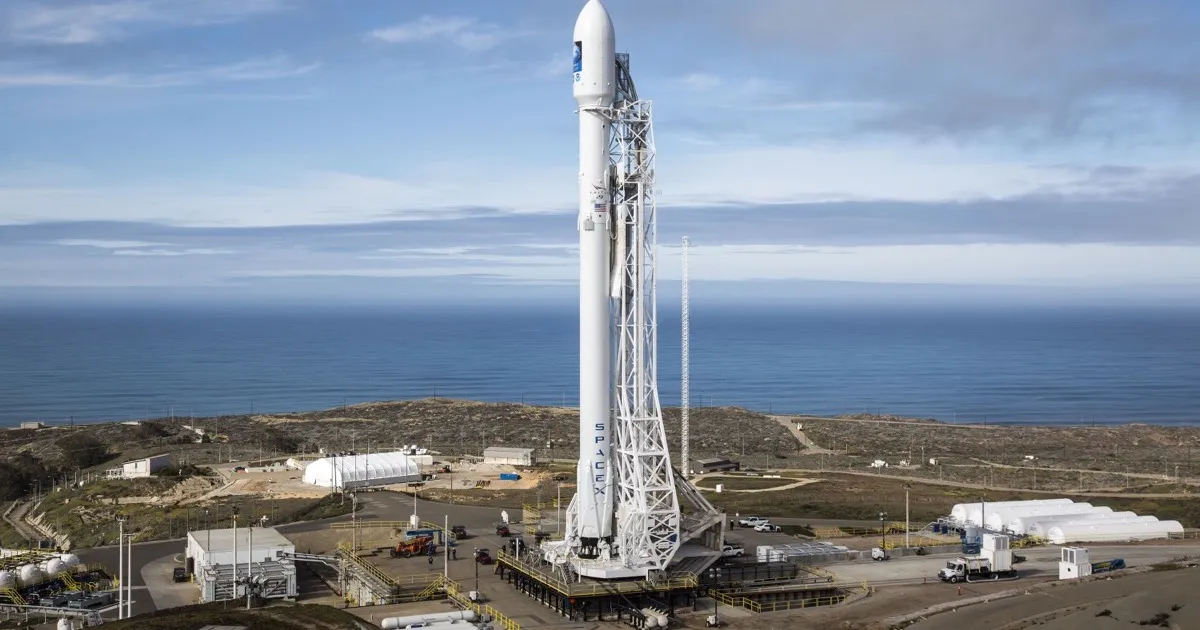
- SpaceX (NASDAQ: SPCX): the rocket-and-satellite company priced its IPO on June 12, 2026 at $135 a share, raising $75 billion in the largest listing in history. Its former AI subsidiary, xAI, was folded in via an all-stock merger that closed February 2, 2026 (reportedly valued near $1.25 trillion) and was rebranded SpaceXAI on July 6 — the Grok chatbot itself keeps its name. SpaceX is now the direct public wrapper for Musk’s rockets, Starlink, and frontier-AI ambitions all at once.
- Tesla (NASDAQ: TSLA): Musk’s other listed vehicle, and the one actually building the humanoid robots (Optimus) central to his ten-year abundance thesis.
- OpenAI (private) & Sam Altman: Musk’s co-founder-turned-rival. Public proxy: Microsoft (MSFT), OpenAI’s largest backer and commercial partner.
- Google DeepMind (Alphabet subsidiary) & Demis Hassabis: the source of the AI-safety framework Musk endorsed in the interview. Public proxy: Alphabet (GOOGL).
- ASML (NASDAQ: ASML): named directly — the Dutch monopolist on the extreme-ultraviolet lithography tools China cannot buy, and the company Musk claims China is closer to replicating than most people realize.
- Moonshot AI (private): the Chinese lab behind Kimi K3, the model Musk singled out as impressive. Public proxies: Alibaba (BABA) and Tencent, both among its disclosed backers.
- The AI compute chain: Nvidia (NVDA) and AMD (AMD) — every prediction in this interview, American or Chinese, terrestrial or orbital, ultimately consumes their silicon.
By the Numbers
Prices below are the July 24, 2026 close (the most recent session; markets were closed for the weekend at publication). SpaceX has no December 31 baseline since it only listed in June, so its return is measured from the $135 IPO price.
| Ticker | Role | Price | Return | Mkt Cap | P/E (TTM) | Note |
|---|---|---|---|---|---|---|
| SPCX | SpaceX / SpaceXAI | $115.07 | −14.8% since IPO | $1.52T | n/m | 52-wk: $110.85–$225.64 |
| TSLA | Tesla / Optimus robots | $313.03 | −30.4% YTD | $1.18T | ~261 | Q2 auto margin miss |
| ASML | Sole EUV lithography supplier | $1,757.09 | +64.2% YTD | $677B | ~60 | China export chokepoint |
| NVDA | AI compute, all sides | $206.84 | +10.9% YTD | $5.01T | ~32 | — |
| AMD | AI compute, all sides | $521.95 | +143.7% YTD | $851B | ~170 | — |
| MSFT | OpenAI’s backer, Altman’s side | $381.70 | −21.1% YTD | $2.84T | ~23 | — |
| GOOGL | DeepMind / Hassabis’s employer | $319.74 | +2.2% YTD | $3.87T | ~24 | — |
| BABA | Moonshot AI backer | $112.14 | −23.5% YTD | $256B | ~17 | — |
Musk himself is the table’s ninth row, unlisted. SpaceX’s IPO briefly made him the world’s first trillionaire on listing day, with Bloomberg pegging his net worth near $1.23 trillion by June 18 — roughly four-fifths of it his roughly 40% SpaceX stake. Fortune’s subsequent headline said it plainly: he was a trillionaire for twelve days. At SPCX’s current $1.52 trillion market cap, that same stake is worth in the neighborhood of $600 billion — a reminder that a “trillionaire” valuation built on a five-week-old, single-name IPO is a mark-to-market number, not a bank balance, and most of it remains locked up post-listing.
The Shift
The Economist interview reads as a personality piece, but the real story is what SpaceX’s stock has already done with Musk’s credibility in the six weeks since it started trading.
That round trip is the market doing exactly what Cassandra’s audience did in the myth: believing the prophecy, bidding it up, then losing conviction before the prophecy has had time to either fail or come true. Nothing about SpaceX’s actual business — Falcon launch cadence, Starlink subscriber growth, the now-merged SpaceXAI unit — changed materially between June 16 and July 24. What changed was how much investors were willing to pay today for outcomes Musk himself puts five, ten, and twenty years out. That is a volatility signature worth remembering the next time SPCX reprices sharply on a headline: this stock has already proven it can lose two-fifths of its value in a month with no change in fundamentals.
The orbital-data-center piece of the story is the clearest test case. Musk’s stated rationale for merging xAI into SpaceX and rebranding the unit SpaceXAI is that “global electricity demand for AI simply cannot be met with terrestrial solutions,” making space-based compute, in his words, the only logical solution — reportedly backed by an FCC filing for roughly a million satellites. It is a real engineering thesis with genuine power-constraint logic behind it, and it is also entirely unproven at any commercial scale. Investors in SPCX are now underwriting that bet as part of the same equity that prices rocket launches and satellite broadband.
Winners & Losers
Winners
- ASML (ASML): wins under either version of the China-lithography story. If Musk is right that China is closer to a breakthrough than believed, ASML’s current tools become more urgently needed by everyone else racing to stay ahead; if he is wrong, ASML keeps its monopoly. The stock’s +64.2% YTD run reflects the second scenario being priced as base case.
- Nvidia (NVDA) and AMD (AMD): agnostic winners — terrestrial data centers, orbital data centers, humanoid robots, and Chinese open-weight models all consume compute. Musk’s predictions, right or wrong, are uniformly bullish for silicon demand.
- Alphabet (GOOGL): Hassabis’s proposed industry-funded “Frontier AI Standards Body,” which Musk publicly called a good starting point, positions DeepMind as the safety-conscious lab setting the rules other labs get judged against — a reputational and regulatory-capture advantage if it gains traction.
Losers & the exposed
- SpaceX (SPCX) shareholders who bought above $160: anyone who chased the post-IPO pop is sitting on a loss even after a strong two years for the broader AI trade — the clearest evidence that hype and fundamentals decoupled in real time.
- Tesla (TSLA): the company actually has to deliver the robots. Its most recent quarter, reported around July 22, showed automotive gross margin excluding regulatory credits coming in soft while management leaned on robotaxi timelines and energy-storage growth in commentary — the honest core business lagging the narrative that is supposed to justify Musk’s ten-year abundance call.
- Microsoft (MSFT): already exposed to closed-model repricing pressure (our prior piece), and now watching its most important AI partner’s co-founder feud with its own CEO play out publicly — a distraction, not a fundamental threat, but a distraction nonetheless.
Risks & Counterpoints
There is also a governance dimension worth flagging plainly rather than relitigating in detail: Musk continues to make polarizing public statements on European politics and immigration that have drawn sustained domestic and international criticism, and he has himself acknowledged overreaching in U.S. politics during 2025. For TSLA and SPCX holders, that is a real, recurring headline-risk variable — distinct from the AI and space theses — that has previously coincided with stock volatility and is likely to again.
The Investment Angle
None of what follows is investment advice; it is a map of how the theme is expressible in public markets.
The direct bet (highest conviction risk): SPCX itself, for investors who want unlevered exposure to whether Musk’s space-and-AI vision compounds over a decade. The past six weeks argue for sizing this as a volatile, story-driven position, not a core holding — a stock that lost 49% from an intraday peak in five weeks can do it again in either direction.
The picks-and-shovels expression (lower conviction risk): NVDA and AMD monetize every version of this future — terrestrial, orbital, humanoid, American, or Chinese — without betting on any single lab’s roadmap. ASML is the more targeted expression of the China-chip-race sub-thesis specifically, though at +64.2% YTD and roughly 60x trailing earnings it is no longer a cheap way to make that bet.
The show-me expression: TSLA is arguably the more interesting near-term test of the abundance thesis than SPCX, precisely because it already trades on Musk’s robotics story (Optimus, robotaxi) while its core auto margins have not yet delivered — the July 22 print was a reminder that the market is still waiting for evidence, not just conviction.
What we would not do is treat Musk’s specific timelines — five years to superhuman AI, ten years to post-scarcity, twenty years to a British civil war — as inputs to a valuation model. They are unfalsifiable on any timeframe an investor actually holds a position, and SpaceX’s own stock chart over the last six weeks is the best evidence available that the market already knows this and is trading the sentiment, not the arithmetic.
The AlphaEdge Take
The most useful thing about this interview is not any single prediction; it is that SpaceX going public turned Musk’s forecasting track record into a security with a real-time price. Six weeks after listing, that price has already told investors more than the interview did: enthusiasm for a founder’s multi-decade vision can add $1.1 trillion of market value in four days and remove it over the following five weeks, with the underlying business barely moving. That is not a verdict on whether Musk is right about AI, robots, or Mars — it is a verdict on how much of his story was already priced before the evidence existed.
What would change our mind on the picks-and-shovels framing: a verified, independently confirmed Chinese EUV milestone would validate Musk’s lithography claim and reprice both ASML’s monopoly premium and the broader chip-race timeline; conversely, a clean Tesla quarter with margin expansion alongside real robotaxi or Optimus revenue would start to close the gap between Musk’s ten-year story and TSLA’s near-term numbers, and make the “show-me” discount look too large rather than too small.
For investors, the discipline is to separate three things the SpaceX chart already separates for you: the compute buildout (real, underway, monetizable today via NVDA/AMD), the specific lab and founder bets (Musk vs. Altman vs. Hassabis vs. Moonshot, all unresolved and largely unfalsifiable on any near-term horizon), and the founder’s personal brand risk (real, recurring, and priced separately from the technology). Own the first category with conviction, size the second as a volatile call option rather than a core position, and never mistake a Cassandra story for a Cassandra price.
Bottom line: SpaceX's own stock has already shown that Musk's multi-decade predictions can move a trillion dollars of market value before a single one of them is proven true or false — trade the compute buildout with conviction, treat the founder-specific bets as options, not cores.
Senior Equity Analyst & Founder at AlphaEdge. Columbia University MSFE (2011–2013). Covering equities, macro, and geopolitics for serious investors.