Dow, S&P 500 and Nasdaq Hit Records as Dell’s AI Server Shock Extends May Rally

The last trading day of May finished with another record close across the Dow, S&P 500 and Nasdaq, but the leadership underneath the headline was narrower and more revealing than the index tape suggested. The S&P 500 rose 0.22% to 7,580.08, the Dow added 364 points to 51,032.65 and the Nasdaq Composite gained 0.21% to 26,972.62 as investors extended the AI-infrastructure trade into the month-end close.
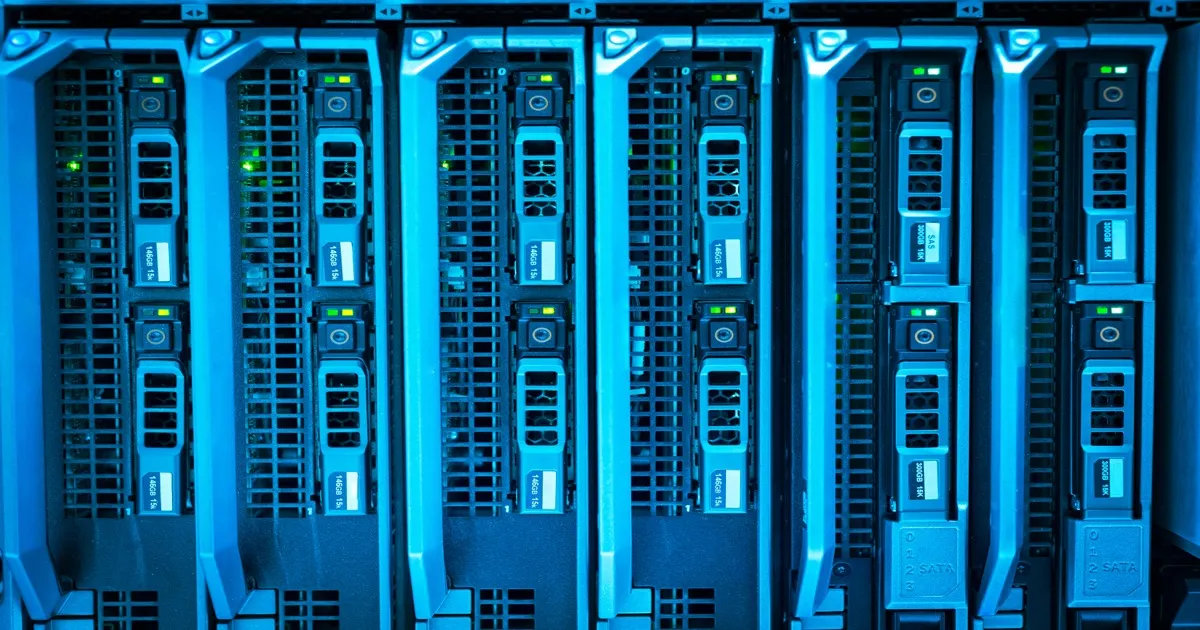
Dell was the session’s spark. The stock jumped 32.8% after management delivered a blowout quarter, raised its full-year outlook and disclosed AI-server revenue of $16.1 billion, up 757% from a year earlier. That single print pulled storage, servers and software higher, helped offset weakness in defensives and communication services, and reinforced the market’s newest bull case: the AI buildout is moving from promise to purchase orders.
Friday’s macro backdrop helped the tape hold together. Oil eased again on U.S.-Iran diplomacy hopes, the Chicago Business Barometer rebounded sharply to 62.7, and Treasury yields slipped modestly even as several Federal Reserve speakers reminded investors that inflation risk has not disappeared. The Russell 2000, however, fell 0.53%, a useful warning that the record highs are still being carried by large-cap growth rather than a full-market breadth surge.
Closing Scoreboard
| Asset | Close | Change | Read-Through |
|---|---|---|---|
| S&P 500 | 7,580.08 | +0.22% | Fresh record close, led by tech |
| Dow Jones Industrial Average | 51,032.65 | +0.72% | Record close, broader blue-chip bid |
| Nasdaq Composite | 26,972.62 | +0.21% | Record close despite mixed mega-cap tape |
| Russell 2000 | 2,920.93 | −0.53% | Small caps lagged the AI-led rally |
| VIX | 15.34 | −2.54% | Volatility drifted lower into month-end |
| DXY Dollar Index | 98.93 | −0.10% | Dollar softened slightly |
| 10-Year Treasury Yield | 4.44% | −2 bps | Rates eased after inventory and PMI data |
| 2-Year Treasury Yield | 4.00% | −3 bps | Front end still pricing a patient Fed |
| 2s/10s Spread | +44 bps | Little changed | Curve stayed positively sloped |
| WTI Crude | $87.91 | −1.11% | Iran relief kept pressure on oil |
| Brent Crude | $91.79 | −0.96% | Global crude premium narrowed modestly |
| Gold | $4,576.10 | +0.96% | Safe-haven demand remained sticky |
| EUR/USD | 1.1660 | +0.09% | Euro firmed against a softer dollar |
| Bitcoin | $73,603 | +0.33% | Crypto stabilized but lagged equities for May |
What Happened
The session opened with a familiar question: could the S&P 500 keep extending after Thursday’s record close and Friday morning’s Dell-led futures bid? The answer was yes, but the route was uneven. Technology led all sectors, storage and server names exploded higher, and software joined the move as investors treated Dell’s order book as confirmation that AI demand is flowing into the physical infrastructure layer.
That matters because the AI trade has spent much of May rotating from chips into the companies that house, network, cool and operate the compute stack. Dell’s report gave that rotation a hard data point. The company did not simply tell investors demand was healthy; it put a 757% year-over-year AI-server revenue surge on the table and backed it with stronger full-year guidance.
The other side of the tape was defensive fatigue. Consumer staples fell 2.0%, communication services dropped 1.7%, health care lost 0.9% and energy slipped with crude. Alphabet weakness weighed on communication services, Costco and Walmart pressure hurt staples, and the auto group softened after reports that regulators were scrutinizing USMCA regional-content calculations.
The result was a record close with a subtle warning label. Investors still want large-cap AI exposure, and they are willing to pay for visible revenue acceleration. They are less willing to pay for companies facing slower pricing power, management transitions or uncertain demand elasticity.
Mega-Cap and Key Movers
| Ticker | Close | Move | Catalyst |
|---|---|---|---|
| DELL | $420.91 | +32.76% | AI-server revenue shock, guidance raise |
| NTAP | $174.29 | +22.39% | AI storage demand and target hikes |
| NOW | $124.37 | +14.38% | Software re-rating as AI fears faded |
| IBM | $297.80 | +12.71% | Enterprise AI infrastructure bid |
| HPE | $43.04 | +12.64% | Server and data-center read-through from Dell |
| SMCI | $46.09 | +11.60% | AI server sympathy rally |
| PLTR | $156.58 | +9.24% | AI software momentum and Dell partnership read-through |
| NVDA | $211.14 | −1.45% | Profit-taking after recent strength |
Top Winners and Losers
Winner: Dell Technologies (DELL)
Dell surged 32.8% in its best session as a public company after the company reported the fastest revenue growth since returning to the market in 2018. AI-server revenue rose 757% year over year to $16.1 billion, total quarterly revenue jumped nearly 88%, and adjusted EPS of $4.86 crushed the $2.94 consensus cited in the market reports reviewed for this article.
The significance goes beyond one earnings beat. Dell is now a direct read-through on enterprise AI budgets, and Friday’s reaction shows investors treating the company less like a cyclical hardware vendor and more like a core supplier to the AI-capex buildout.
Winner: NetApp (NTAP)
NetApp rose 22.4% after guidance and analyst commentary pointed to stronger AI-related storage demand. MarketWatch headlines during the session flagged earnings and sales forecasts above expectations, while TD Cowen lifted its price target to $200 from $130 and several other firms raised targets.
The stock’s move was a clean example of Friday’s theme: investors are rewarding companies that can tie current revenue to AI infrastructure spending, not just long-dated AI narratives.
Winner: ServiceNow (NOW)
ServiceNow gained 14.4% as the AI software complex caught a second wind. The move was less about a single new Friday filing and more about a sector-wide re-rating: Dell’s demand commentary lowered fears that AI spending is stuck at the chip layer, while recent software results continued to show enterprise appetite for workflow automation and productivity tools.
That matters for the broader Nasdaq. If AI software can participate alongside hardware and semiconductors, the index’s leadership base becomes more durable heading into June.
Loser: Clorox (CLX)
Clorox fell 6.4% after the company said CEO Linda Rendle would step down for health reasons and that the board would begin a search for a successor. The management transition landed on a day when consumer staples were already the weakest S&P 500 sector, amplifying the stock-specific pressure.
The decline also sits against a tougher consumer-staples backdrop. Investors have become less forgiving of companies facing slower volume growth, higher promotional intensity and less room to pass through costs.
Loser: ResMed (RMD)
ResMed dropped 6.3% and traded near a 52-week low. No single fresh company-specific catalyst stood out in the accessible market wires reviewed during the session, so the move is best classified as technical and sector-driven: health care lagged, medical-device momentum remained soft, and sellers pressed a chart already under pressure.
That distinction matters. The price action was real, but the catalyst was not a clean earnings miss, regulatory headline or analyst downgrade. It looked more like forced de-risking in a weak corner of the tape.
Loser: Intel (INTC)
Intel fell 5.1% even as the broader AI infrastructure complex rallied. The stock had entered Friday with extraordinary momentum, up more than 200% year to date according to MarketWatch quote-page data, which made it vulnerable to profit-taking once investors rotated toward cleaner Dell and storage read-throughs.
The drop was not a rejection of the AI-hardware theme. It was a reminder that the market is becoming more selective inside that theme, rewarding confirmed order acceleration while taking gains in names where expectations have already reset sharply higher.
Sector Breakdown
| Sector | Close | Move | Driver |
|---|---|---|---|
| Information Technology | 7,021.77 | +1.87% | Dell-led AI infrastructure surge |
| Financials | 856.67 | +0.56% | Curve stability, risk-on tone |
| Materials | 638.95 | −0.38% | Quiet cyclical lag |
| Industrials | 1,463.53 | −0.43% | Transport and auto-related pressure |
| Utilities | 449.71 | −0.46% | Defensive fade |
| Health Care | 1,739.78 | −0.87% | Devices and managed-care weakness |
| Real Estate | 279.06 | −0.97% | Rate-sensitive group lagged |
| Consumer Discretionary | 2,002.94 | −1.05% | Retail and auto softness |
| Energy | 854.93 | −1.07% | WTI and Brent declined |
| Communication Services | 493.15 | −1.70% | Alphabet pressure |
| Consumer Staples | 921.47 | −2.00% | Clorox, Costco, Walmart drag |
Global Markets
The global backdrop remained constructive enough for U.S. risk appetite. European shares were mixed-to-firmer as oil relief reduced the urgency of the Strait of Hormuz risk premium. Asian markets entered the day with the same broad template that shaped U.S. trading: investors wanted exposure to AI and global technology supply chains, while energy and defensive groups faded as geopolitical fear moderated.
The important cross-market signal was not a single overseas index level; it was correlation. Lower crude, softer volatility and persistent demand for AI infrastructure created a synchronized risk tone that helped U.S. large caps absorb hawkish Fed commentary without giving up the record close.
Fixed Income and Commodities
Treasury yields slipped modestly, with the 10-year near 4.44% and the 2-year around 4.00%. That was enough to keep valuation pressure contained for long-duration growth equities, but it was not a dovish all-clear. Fed officials stayed cautious, with Jeffrey Schmid warning that an energy shock may not prove temporary and Michelle Bowman suggesting persistent inflation could still require tighter policy.
Oil remained the macro relief valve. WTI fell 1.1% to $87.91 and Brent slipped just under 1% to $91.79 as U.S.-Iran diplomacy hopes continued to drain the most acute war premium from crude. That helped equities by reducing the immediate stagflation risk that dominated earlier in the month.
Gold rose 1.0% to $4,576.10, an interesting counterpoint to the record equity close. Investors are still hedging geopolitics and central-bank uncertainty even while buying AI growth. Bitcoin traded near $73,603, up 0.33%, stabilizing after a weak month but not leading the risk rally.
Corporate News
Dell was the defining corporate event. The company’s AI-server revenue and guidance raise turned the session into a referendum on infrastructure spending and gave investors permission to chase adjacent server, storage and enterprise-technology names.
NetApp benefited from the same theme after guidance and analyst target increases highlighted demand for AI data storage. Hewlett Packard Enterprise and Super Micro Computer also rallied sharply as the market looked for the next order-book beneficiaries.
Palantir gained after investors connected its AI software platform to the Dell AI Factory with Nvidia ecosystem. Clorox moved the other way after announcing a CEO transition, while Intel sold off despite broader hardware strength as traders took profits after a huge year-to-date run.
Economic Data
| Release | Actual | Consensus | Prior | Market Read |
|---|---|---|---|---|
| Chicago Business Barometer, May | 62.7 | 50.8 | 49.2 | Clear upside surprise |
| Advanced Goods Trade Balance, April | −$82.4B | n/a | −$85.3B | Deficit narrowed |
| Advanced Retail Inventories, April | +0.7% | n/a | +0.7% | Stable stock build |
| Advanced Wholesale Inventories, April | +0.5% | n/a | +1.5% | Inventory build slowed |
The Chicago PMI surprise was the cleanest macro data point of the day. A jump to 62.7 from 49.2 pushed the series decisively back into expansion territory and gave cyclicals a better growth backdrop, even if small caps did not respond. The inventory data were less dramatic but consistent with a still-functioning goods economy.
After-Hours Movers
| Ticker | After-Hours Price | Move | Context |
|---|---|---|---|
| DELL | $419.80 | −0.26% | Digesting the day’s 32.8% surge |
| INTC | $115.32 | +0.55% | Small bounce after regular-session profit-taking |
| CLX | $90.24 | +0.24% | Minor stabilization after CEO-transition selloff |
| YMM | $8.96 | +1.59% | Light after-hours risk bid |
| ACM | $68.95 | −0.61% | Thin Friday evening trading |
There was no mega-cap earnings shock after the bell. The after-hours tape was mostly digestion: Dell held nearly all of its historic gain, Intel bounced slightly, and defensive losers stabilized modestly.
The AlphaEdge Take
Friday was a bullish close, but not a complacent one. The index scoreboard says records; the sector tape says selectivity. Investors are rewarding companies that can prove AI demand in current revenue and punishing companies that rely on pricing power, defensive status or stale momentum.
The best version of this rally is that Dell’s quarter marks a second phase of the AI bull market. In phase one, investors paid for chips. In phase two, they pay for the servers, storage, networking, software and power chain that turns chips into production capacity. That broadens the investable universe and gives the Nasdaq a healthier foundation.
The risk is that the market mistakes capex intensity for unlimited earnings durability. AI infrastructure is real, but it is also cyclical, competitive and capital-hungry. If orders slow, margins compress or rates rise again, the same stocks that just received multiple expansion can give it back quickly.
For now, the base case into Monday is constructive but selective: stay with proven AI-infrastructure beneficiaries, avoid chasing weak defensives simply because they look cheap, and watch whether the Russell 2000 can rejoin the move. A record high that cannot pull small caps along is still a record high, but it is a narrower one than the headline suggests.
Senior Equity Analyst & Founder at AlphaEdge. Columbia University MSFE (2011–2013). Covering equities, macro, and geopolitics for serious investors.