Dow Plunges 953 Points as CPI and AI Rout Hit Stocks

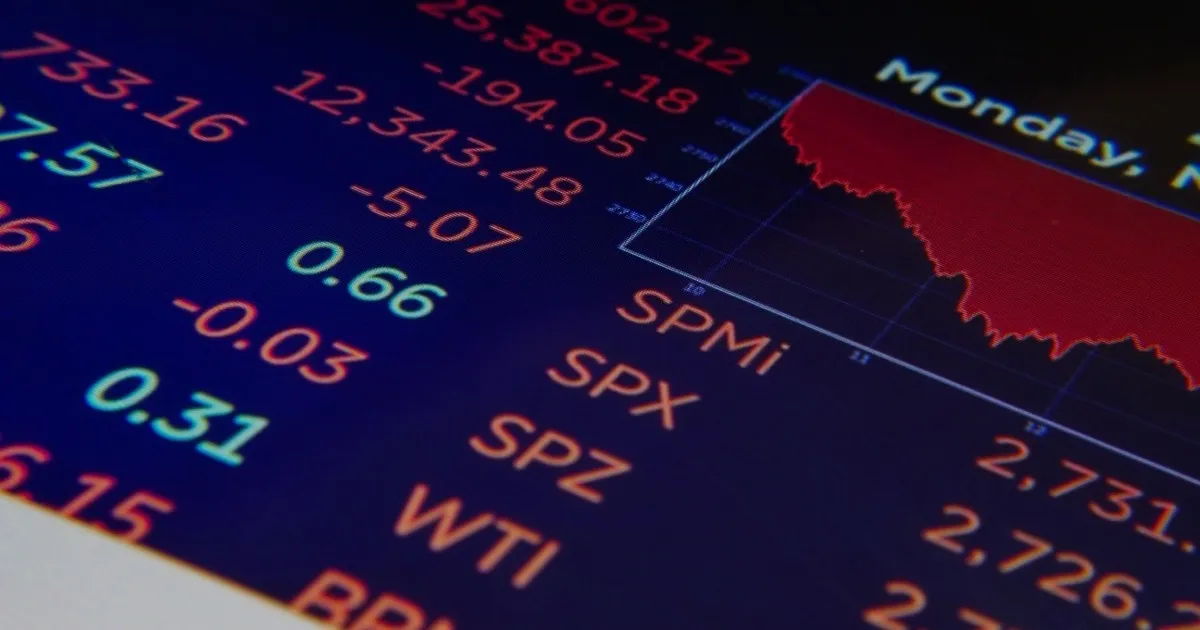
Wednesday’s market did not merely fail to recover from the morning’s CPI shock. It accelerated lower into the close. The Dow Jones Industrial Average fell 953.33 points, or 1.87%, to 49,918.78, breaking back below the 50,000 line as investors repriced inflation, oil-risk and crowded AI exposure in the same session.
The S&P 500 slid 1.62% to 7,266.99, finishing below the 7,320–7,390 base-case range laid out in this morning’s AlphaEdge preview. The Nasdaq Composite lost 509.32 points, or 1.98%, to 25,169.50 as AI-linked hardware, server and software stocks absorbed another wave of forced de-risking. The Russell 2000 held up slightly better but still dropped 1.10% to 2,835.46.
The trigger was May CPI. Headline inflation ran at 4.2% year over year, a three-year high, while core CPI was 2.9%, broadly in line with forecasts. That combination left traders with an uncomfortable mix: core inflation was not spiraling, but headline inflation was high enough to challenge Fed-cut hopes just as renewed U.S.-Iran tension pushed crude prices higher and lifted the VIX above 22.
Closing Scoreboard
| Market | Close / Latest | Change | Percent |
|---|---|---|---|
| Dow Jones Industrial Average | 49,918.78 | −953.33 | −1.87% |
| S&P 500 | 7,266.99 | −119.66 | −1.62% |
| Nasdaq Composite | 25,169.50 | −509.32 | −1.98% |
| Russell 2000 | 2,835.46 | −31.56 | −1.10% |
| VIX | 22.22 | +2.35 | +11.83% |
| 10-Year Treasury Yield | 4.534% | +0.006 | — |
| 2-Year Treasury Yield | 4.137% | +0.013 | — |
| 2s/10s Spread | +39.7 bps | −0.7 bp | — |
| WTI Crude | $90.34 | +$2.14 | +2.43% |
| Brent Crude | $93.25 | +$1.80 | +1.97% |
| Gold Futures | $4,103.00 | −$183.40 | −4.28% |
| EUR/USD | $1.1541 | −0.0002 | −0.02% |
| Bitcoin | $61,856 | −$190 | −0.31% |
What Happened
The morning setup already carried three stress points: CPI risk, Iran headlines and an AI-chip selloff that had not fully stabilized from Tuesday’s failed rebound. Once the CPI print confirmed a 4.2% annual headline rate, traders had little reason to chase growth multiples. The first reaction was not a panic unwind, but it became one as oil strengthened, yields stayed sticky and the Nasdaq failed to find a second-half bid.
The key distinction from Tuesday is breadth. Tuesday still looked like rotation under the surface: several defensive and rate-sensitive groups worked while technology faded. Wednesday looked broader and uglier. Industrials dropped 3.41%, materials lost 2.45%, technology fell 2.34%, consumer discretionary slid 2.23%, and communication services dropped 1.65%. Energy and staples were the only clean green pockets.
That makes Wednesday a more serious signal than a one-sector AI reset. Investors were not only selling optical hardware and server makers. They were also trimming cyclicals, transports, Dow industrial bellwethers and long-duration growth. The market moved from “rotation, not liquidation” to “liquidation with a few inflation hedges.”
Mega-Cap and Key Movers
| Ticker | Company | Close | Move | Read-through |
|---|---|---|---|---|
| CASY | Casey’s General Stores | $915.60 | +20.29% | Strong earnings, higher profit and positive outlook drove S&P 500 leadership. |
| SJM | J.M. Smucker | $117.05 | +4.15% | Post-earnings analyst target increases supported staples leadership. |
| HOOD | Robinhood | $87.15 | +4.04% | IPO-underwriting approval, insider buying and May metrics offset market weakness. |
| SMCI | Super Micro Computer | $31.91 | −21.49% | $7 billion financing plans overshadowed a $39 billion AI-server order story. |
| FDXF | FedEx Freight | $176.13 | −6.54% | Amazon’s less-than-truckload freight expansion pressured transport shares. |
| CAT | Caterpillar | $856.26 | −6.39% | Dow bellwether sank as cyclicals and industrial AI-power plays were de-risked. |
| HON | Honeywell | $207.32 | −3.89% | Aerospace and industrial exposure lagged; the stock helped drag the Dow lower. |
| ORCL | Oracle | $205.81 | −2.84% | Fell before earnings as cloud backlog and AI infrastructure capex came into focus. |
Top 3 Winners and Top 3 Losers
Winners
Casey’s General Stores (CASY) +20.29%: Casey’s was the standout S&P 500 winner after quarterly profit and revenue rose, helped by pizza sales and fuel-margin dynamics. Barron’s framed the move as the top S&P 500 stock of the day, and the stock closed at $915.60 after trading as high as $917.47. The important read-through is that investors rewarded company-specific earnings quality even on a risk-off tape.
J.M. Smucker (SJM) +4.15%: Smucker extended its post-earnings rally to $117.05. The stock drew a wave of analyst target increases on Wednesday, including higher targets from RBC Capital, JPMorgan, TD Cowen, BTIG, Wells Fargo and Morgan Stanley according to MarketWatch-syndicated headlines. In a session where CPI punished high-multiple growth, packaged-food cash flow and pricing power became a refuge.
Robinhood (HOOD) +4.04%: Robinhood was one of the cleaner large-cap risk winners, closing at $87.15 despite the broad selloff. The catalyst stack was unusually specific: the company received a green light to underwrite IPOs, reported upbeat May trading metrics, and drew attention after an insider stock purchase. Goldman Sachs also raised its price target to $108 from $105, helping the fintech name decouple from weak crypto and growth-stock sentiment.
Losers
Super Micro Computer (SMCI) −21.49%: Super Micro was the clearest AI casualty. Shares plunged to $31.91 after the company’s plan to raise about $7 billion overshadowed discussion of roughly $39 billion in AI-server orders. That distinction is crucial: demand is not the problem, but funding, dilution, execution and margins are now the questions investors are forcing management to answer.
FedEx Freight (FDXF) −6.54%: FedEx Freight fell to $176.13 after Amazon expanded its less-than-truckload freight business, a direct competitive threat to transport incumbents. MarketWatch and Barron’s both flagged the Amazon news as the reason transports stopped acting like a haven. The stock had been a post-spinoff refuge; Wednesday showed how quickly that premium can compress when a platform competitor enters the lane.
Caterpillar (CAT) −6.39%: Caterpillar dropped to $856.26 and was repeatedly cited by MarketWatch as a leading drag on the Dow. The move had no single earnings miss behind it; it was a macro-and-positioning selloff. A hotter CPI print, higher crude, Iran-risk headlines and crowded enthusiasm around power, data-center and industrial AI infrastructure all hit at once, turning a high-quality cyclical into a source of index downside.
Sector Breakdown
| Sector | Move | Session Message |
|---|---|---|
| Consumer Staples | +1.69% | Defensive pricing power was the day’s cleanest hiding place. |
| Energy | +1.46% | Oil strength turned geopolitical risk into sector support. |
| Real Estate | +0.02% | Barely positive; rate-sensitive support faded into the close. |
| Utilities | −0.01% | Defensive, but not enough to signal broad risk appetite. |
| Financials | −0.50% | Sticky yields helped margins but risk-off pressure dominated. |
| Health Care | −1.15% | Defensive growth could not fully absorb the volatility spike. |
| Communication Services | −1.65% | Growth exposure weighed as Nasdaq weakness broadened. |
| Consumer Discretionary | −2.23% | Higher inflation and oil risk pressured consumer multiples. |
| Technology | −2.34% | AI hardware and high-duration software drove index downside. |
| Materials | −2.45% | Cyclical exposure sold off with global growth sensitivity. |
| Industrials | −3.41% | Caterpillar, transports and automation names led the pain. |
The sector map carried a plain message: this was not a healthy rotation. Consumer staples and energy worked because one offers pricing-power defense and the other benefits from higher oil. Real estate and utilities did not confirm a strong flight to yield. Industrials were the weakest group, which matters because that is where the AI power-infrastructure story, transport competition story and macro cyclicality all overlap.
Global Markets
Global markets were already leaning defensive before the U.S. close. Asia was broadly weaker, with Japan’s Nikkei down 1.89%, South Korea’s Kospi down 4.52%, Hong Kong’s Hang Seng off 0.64% and the Shanghai Composite lower by 0.42%. The Asian tone matched the U.S. story: technology and export-sensitive equities struggled as investors reassessed AI momentum and geopolitical risk.
Europe was mixed but not strong enough to offer U.S. investors cover. The FTSE 100 rose 0.27%, helped by its commodity and defensive tilt, while Germany’s DAX fell 0.97%, France’s CAC 40 lost 0.51% and the STOXX 600 slipped 0.08%. That left the U.S. close looking less like an isolated domestic inflation reaction and more like a global de-risking day with oil-sensitive pockets of resilience.
| Region | Market | Close | Move |
|---|---|---|---|
| Asia | Nikkei 225 | 64,179.27 | −1.89% |
| Asia | Kospi | 7,730.82 | −4.52% |
| Asia | Hang Seng | 24,407.96 | −0.64% |
| Asia | Shanghai Composite | 3,993.23 | −0.42% |
| Europe | FTSE 100 | 10,254.81 | +0.27% |
| Europe | DAX | 24,195.31 | −0.97% |
| Europe | CAC 40 | 8,161.83 | −0.51% |
| Europe | STOXX 600 | 618.17 | −0.08% |
Fixed Income and Commodities
The bond market did not explode, but it also did not give equity bulls enough relief. The 10-year Treasury yield was near 4.534%, up about 0.6 basis point, and the 2-year yield was near 4.137%, up about 1.3 basis points. The curve remained positively sloped at roughly 39.7 basis points. That is not a rates panic, but with CPI at 4.2% and oil rising, the market could not lean on a clear disinflation narrative.
Crude was the bigger cross-asset problem. WTI settled near $90.34, up 2.43%, and Brent traded around $93.25, up 1.97%, as Iran headlines kept supply-risk premium alive. Energy equities rallied, but the broader market treated the move as an inflation tax. Gold fell sharply to roughly $4,103, while the euro was little changed near $1.1541 and bitcoin eased to about $61,856.
Corporate News
Oracle was the central after-the-close setup. Shares fell 2.84% to $205.81 in regular trading and were down again in the after-hours screen as investors waited for cloud infrastructure growth, AI backlog conversion, capex intensity and margin commentary. The company is no longer being judged only on top-line cloud demand; it is being judged on whether that demand can be served profitably while compute needs surge.
Super Micro was the cautionary example for the entire AI hardware complex. A $39 billion order narrative sounds bullish, but a $7 billion financing plan immediately reframed the question around dilution and cash needs. That is the market’s new AI test: backlog is useful only if the balance sheet, supply chain and margin structure can carry it.
Amazon added another pressure point outside technology by expanding its less-than-truckload freight business. FedEx Freight, Old Dominion and related transport names sold off as investors reassessed how much pricing power freight incumbents can defend if Amazon pursues the market aggressively. Meanwhile, Casey’s, Smucker and Robinhood showed that single-stock catalysts can still work, but those wins were not enough to offset index-level de-risking.
Economic Data
May CPI was the day’s dominant macro release. Headline inflation reached 4.2% year over year, while core CPI, excluding food and energy, printed 2.9% and was described as in line with forecasts. The split matters. Core stability kept the day from becoming a pure Fed panic, but headline inflation was high enough to make oil-sensitive investors uncomfortable.
| Release | Actual | Market Read |
|---|---|---|
| May CPI, year over year | 4.2% | Hot headline inflation kept Fed-cut risk premium alive. |
| Core CPI, year over year | 2.9% | In line with forecasts, but not enough to offset the oil shock. |
| Thursday focus | Claims / rates / Oracle read-through | Watch whether macro stress becomes earnings-estimate stress. |
After-Hours Movers
| Ticker | After-Hours Last | After-Hours Move | Context |
|---|---|---|---|
| TXRH | $167.52 | +2.00% | Led the MarketWatch after-hours gainers list. |
| IBKR | $86.50 | +1.26% | Brokerage shares saw modest post-close demand. |
| VEEV | $165.78 | +1.21% | Software name stabilized after the regular-session selloff. |
| TDY | $576.65 | −4.19% | Worst major after-hours laggard on the screen. |
| CNM | $47.75 | −3.44% | Industrial-distribution weakness continued post-close. |
| ORCL | $200.98 | −1.26% | Traders stayed cautious before the earnings call and AI-cloud details. |
The AlphaEdge Take
Wednesday changed the character of the week. Tuesday’s weakness could still be explained as selective de-risking in crowded AI trades. Wednesday broadened the problem: CPI was hot, crude oil rose, the Dow broke 50,000, industrials led the sector decline and the Nasdaq could not stabilize even with Oracle still ahead.
For bulls, the argument is now narrower but not gone. Core CPI at 2.9% was not a disaster, the 10-year yield did not break above 4.60%, and the market still rewarded clean earnings stories such as Casey’s and Smucker. If Oracle can defend AI-cloud demand without worsening capex fears, Thursday could bring a reflex rally.
For bears, the warning is that the market is losing tolerance for financing risk and long-duration promises. Super Micro’s plunge says investors want proof that AI backlog can convert into cash flow. Caterpillar’s drop says cyclicals are no longer automatically protected by the power-and-data-center theme. FedEx Freight’s decline says platform competition can hit perceived havens quickly.
The AlphaEdge bottom line: this was a real risk-off session, not just another rotation. Stay defensive unless the S&P 500 reclaims 7,300–7,320, VIX cools back below 21, WTI stops pushing toward the mid-$90s, and Oracle proves that AI infrastructure demand can survive a higher-inflation tape without forcing investors to underwrite another capex shock.
Senior Equity Analyst & Founder at AlphaEdge. Columbia University MSFE (2011–2013). Covering equities, macro, and geopolitics for serious investors.